Who Will Win the 2026 FIFA World Cup? Prediction Markets Analysis
Last updated: May 2026 · 9 min read
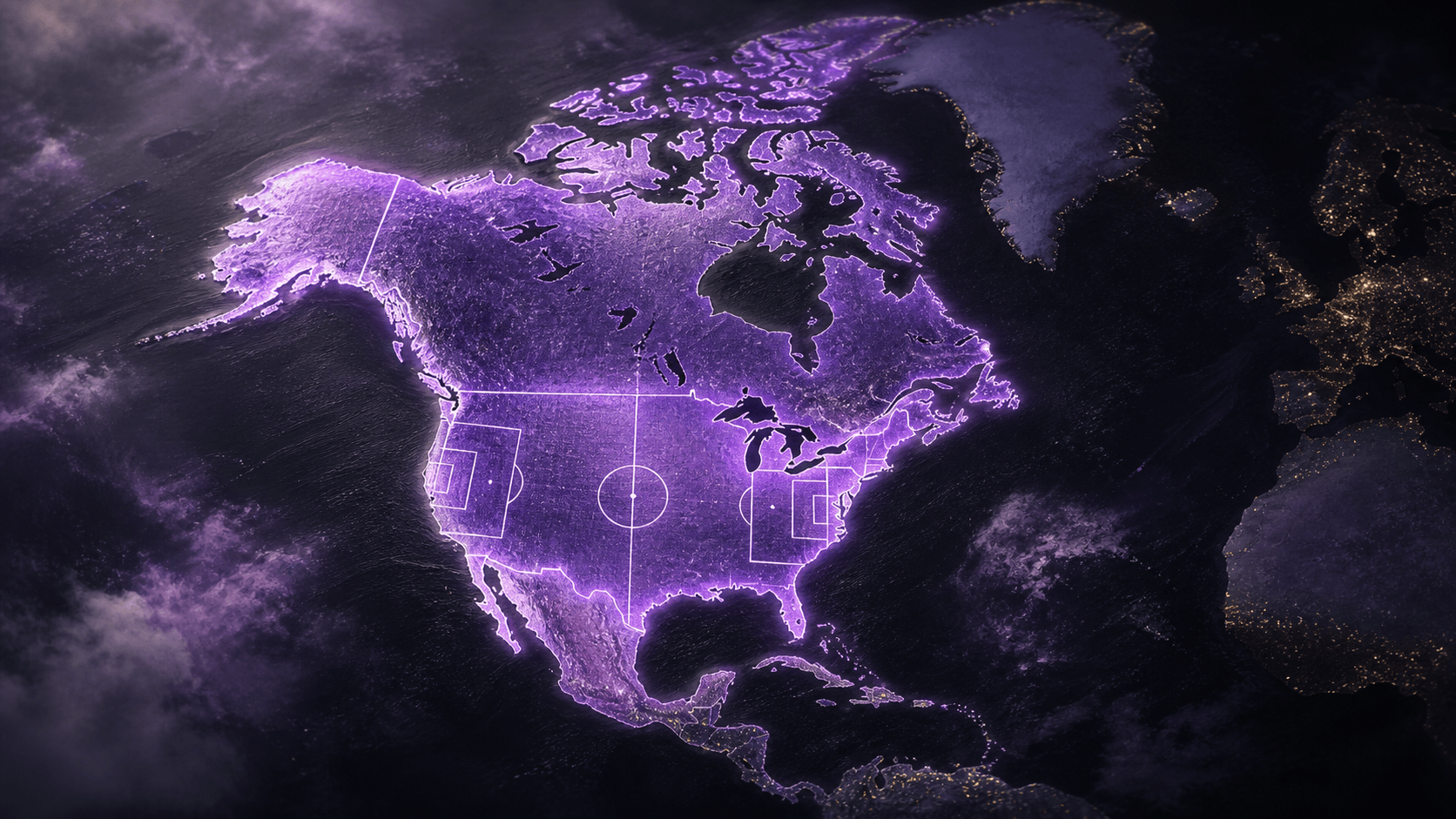
The 2026 FIFA World Cup is the largest sporting event in history by participating nations — 48 teams competing across the United States, Canada, and Mexico for the sport’s ultimate prize. With the tournament approaching, prediction markets have formed clear probability estimates around the leading contenders, with several nations emerging as consistent favourites while others remain genuinely uncertain propositions.
This article examines what prediction markets are saying about the most likely winners, which nations carry the strongest structural case, and where genuine uncertainty remains. It also covers the broader mechanics of how sports forecasting works — why probabilities matter more than confident picks, and what the historical record tells us about predicting tournament outcomes. For the underlying logic of how prediction markets form these probabilities, see how prediction markets work in sports forecasting.
Quick Answer
Prediction markets currently favour Brazil, France, and England as the leading contenders for the 2026 World Cup, with Spain also carrying significant probability given their recent European Championship success. No single team dominates — the probabilities are distributed across 5–6 genuine contenders, reflecting the structural reality that tournament football is highly uncertain and even the strongest nations win the World Cup only occasionally.
The Leading Contenders: What Prediction Markets Show
Tournament prediction markets distribute probability across multiple contenders rather than concentrating it on a single favourite. This reflects the genuine structural uncertainty of knockout football — where a single match can eliminate even the strongest team, and where the difference in quality between the top eight nations is smaller than popular narratives suggest.
2026 World Cup — Approximate Prediction Market Probability Ranges
| Nation | Probability Range | Key Strength |
|---|---|---|
| Brazil | 14–18% | Squad depth, attacking quality, tournament experience |
| France | 13–17% | Elite individual talent, strong defensive structure |
| England | 10–14% | Consistent squad, strong competitive form |
| Spain | 10–13% | Euro 2024 winners, strong tactical identity |
| Argentina | 8–12% | Defending champions, though post-Messi transition uncertain |
| Germany | 7–10% | Rebuilding but historically dangerous in tournaments |
Probability ranges are indicative based on prediction market data. Exact figures vary by platform and update continuously.
Brazil: The Consistent Favourite
Brazil enters 2026 as the most consistently favoured nation across prediction markets. The structural case is straightforward: squad depth that no other nation matches, a generation of elite attacking talent, and the longest tournament pedigree in the sport’s history with five World Cup titles.
The counter-argument is also well-established. Brazil has not won the World Cup since 2002 — a 24-year gap that has seen them exit at the quarter-final or semi-final stage in multiple tournaments despite carrying strong squads. Tournament football’s knockout structure means that even the best-prepared team can be eliminated by a single result, and Brazil’s recent history shows this vulnerability clearly.
France: Elite Talent, Fragile Cohesion
France’s individual talent pool is arguably the deepest in world football. Kylian Mbappé leads a generation of technically exceptional players who compete at the highest level in club football. The collective record matches this — 2018 World Cup winners, 2022 runners-up, consistent semi-finalists.
The persistent question around France is whether individual talent translates into collective cohesion under tournament pressure. Internal dynamics have been a recurring narrative for French squads, and the gap between their best individual players and their collective output as a team has been visible at times. Markets price this risk into their probability — France is highly likely to reach the latter stages, but the variance around their final outcome is significant.
England, Spain, and Argentina: The Chasing Pack
England
England carries the weight of expectation that comes with consistent near-misses — semi-finals in 2018, runners-up at Euro 2020, quarter-finals in 2022. The squad has the quality to contend, and a favourable draw could see them reach the latter stages. Markets price them as genuine contenders rather than outsiders, but their probability remains lower than Brazil and France given the historical pattern of underperforming relative to squad quality.
Spain
Spain’s Euro 2024 victory demonstrated that their tactical system — built around positional play, pressing, and technical excellence — remains world-class. Their squad has a strong tactical identity and a clear structure that functions well under tournament conditions. The gap from Euro success to World Cup victory is significant, but Spain’s current form makes them a credible contender.
Argentina
Argentina enters 2026 as defending champions — a status that carries both the prestige of recent success and the structural challenge of post-peak transition. The question of Lionel Messi’s role and availability significantly influences Argentina’s probability assessment, which is covered in detail in a separate analysis.
Why Tournament Predictions Are Inherently Uncertain
The probability distributions above — spread across 5–6 nations with no team above 18% — accurately reflect the genuine uncertainty of World Cup outcomes. Since 1990, only Brazil (2002), France (1998, 2018), Germany (2014), Spain (2010), and Argentina (2022) have won. The defending champion has won back-to-back only once in the modern era (Brazil 1958-62).
A team with 15% probability winning the tournament is not a surprise — it happens with exactly that frequency over many tournaments. The value of prediction market analysis is not to identify the certain winner but to understand the realistic probability landscape: which teams have earned higher probability through squad quality and form, and where the genuine uncertainty sits.
Follow the World Cup
Participate in 2026 World Cup Prediction Markets on Nexory
Nexory hosts prediction markets on World Cup outcomes — from tournament winners to individual match results. Explore active markets and see how collective expectations evolve through the competition.
Explore Predictions on NexoryConclusion: Distributed Uncertainty, Not a Clear Favourite
The 2026 World Cup does not have a prohibitive favourite. Prediction markets distribute probability across six genuine contenders, reflecting the structural reality that knockout football produces enormous variance. Brazil leads on accumulated probability, but their historical record in the knockout era suggests that leadership in pre-tournament markets does not reliably translate into the trophy.
The most useful frame is not “who will win” but “which teams have earned the right to be considered genuine contenders?” By that standard, Brazil, France, England, Spain, Argentina, and Germany all qualify. The tournament itself — with its 48-team format, three host nations, and inevitable moments of uncertainty — will determine which of these probabilities resolves in the most unlikely direction.
Frequently Asked Questions
When is the 2026 FIFA World Cup?
The 2026 FIFA World Cup runs from June 11 to July 19, 2026, hosted across the United States, Canada, and Mexico. It is the first World Cup to feature 48 teams, expanded from 32, making it the largest edition in the tournament’s history.
Who are the favourites to win the 2026 World Cup?
Prediction markets consistently place Brazil and France as the leading contenders, followed by England, Spain, Argentina, and Germany. No team holds a dominant probability — the realistic range for the leading nation is approximately 15–18%, reflecting the genuine uncertainty of knockout tournament football.
Has the defending champion ever won back-to-back World Cups?
Only once in the modern era — Brazil won in 1958 and 1962. Since 1966, no defending champion has successfully retained the title. This historical record is one reason Argentina’s probability as defending champions is not disproportionately high despite their 2022 victory.
How does the expanded 48-team format affect predictions?
The 48-team format adds a group stage round and increases the total number of matches, which theoretically gives stronger teams more margin for recovery if they stumble early. However, it also means more matches and cumulative fatigue, and introduces more potential upset opportunities in early rounds that could eliminate high-probability teams.