Will England Finally Win the World Cup in 2026?
Last updated: May 2026 · 7 min read
England last won the World Cup in 1966. Sixty years. No other major football nation has waited as long, and no sporting drought carries quite the same cultural weight in Britain. Each tournament arrives with renewed hope — and, until now, inevitable disappointment.
But the 2026 tournament is different, at least on paper. England’s current generation — Bellingham, Saka, Kane, Foden — represents the deepest pool of talent the nation has produced in decades. The question is whether this squad can finally translate quality into the result that has eluded English football for sixty years.
Quick Answer
England enter 2026 with arguably their strongest squad in a generation. The talent — led by Bellingham, Saka, and Kane — is genuinely there. But historical knockout fragility, tactical questions, and competition from Brazil, France, and Argentina mean a first title since 1966 remains uncertain rather than probable. This is a realistic contender, not a guaranteed one.
England’s Recent Tournament Trajectory
To understand 2026, it helps to look at the recent pattern. England have progressively improved in major tournaments, reaching the later stages with increasing consistency:
England — Recent Major Tournament Results
| Tournament | Result | Eliminated by |
|---|---|---|
| 2018 World Cup | Semi-final | Croatia |
| Euro 2020 | Final | Italy (penalties) |
| 2022 World Cup | Quarter-final | France |
| Euro 2024 | Final | Spain |
The pattern shows a team capable of reaching the later stages consistently — but falling short at the final hurdle. For 2026, the question is whether the accumulated experience of these near-misses finally translates into winning football when it matters most.
The Generation That Could End the Wait
Jude Bellingham
England’s most complete player and their creative engine. Bellingham’s ability to drive from midfield, score in big moments, and lead by example makes him central to any England success. His performances for Real Madrid have confirmed that he operates at the very highest level of the game.
Bukayo Saka
Consistent, creative, and difficult to dispossess, Saka has become one of the first names on England’s teamsheet. His ability to operate in tight spaces and create chances from wide areas makes him a key attacking weapon throughout the tournament.
Harry Kane
The all-time England top scorer brings goal threat, hold-up play, and leadership across the pitch. Kane’s positioning, aerial ability, and penalty conversion rate make him dangerous in any attacking system. When available and sharp, he remains world class.

What Has Historically Held England Back
England’s failures in major tournaments are not simply about talent — they have had talented squads before. The recurring themes are structural:
Knockout stage fragility: England’s record in penalty shootouts has historically been poor, though recent tournaments have shown improvement. The mental pressure of elimination football — where a single mistake can end a tournament — remains a genuine challenge.
Tactical rigidity: Previous England squads have often struggled to adapt when opponents make adjustments at half-time or between games. The 2022 defeat to France exposed vulnerabilities that a more tactically flexible approach might have addressed.
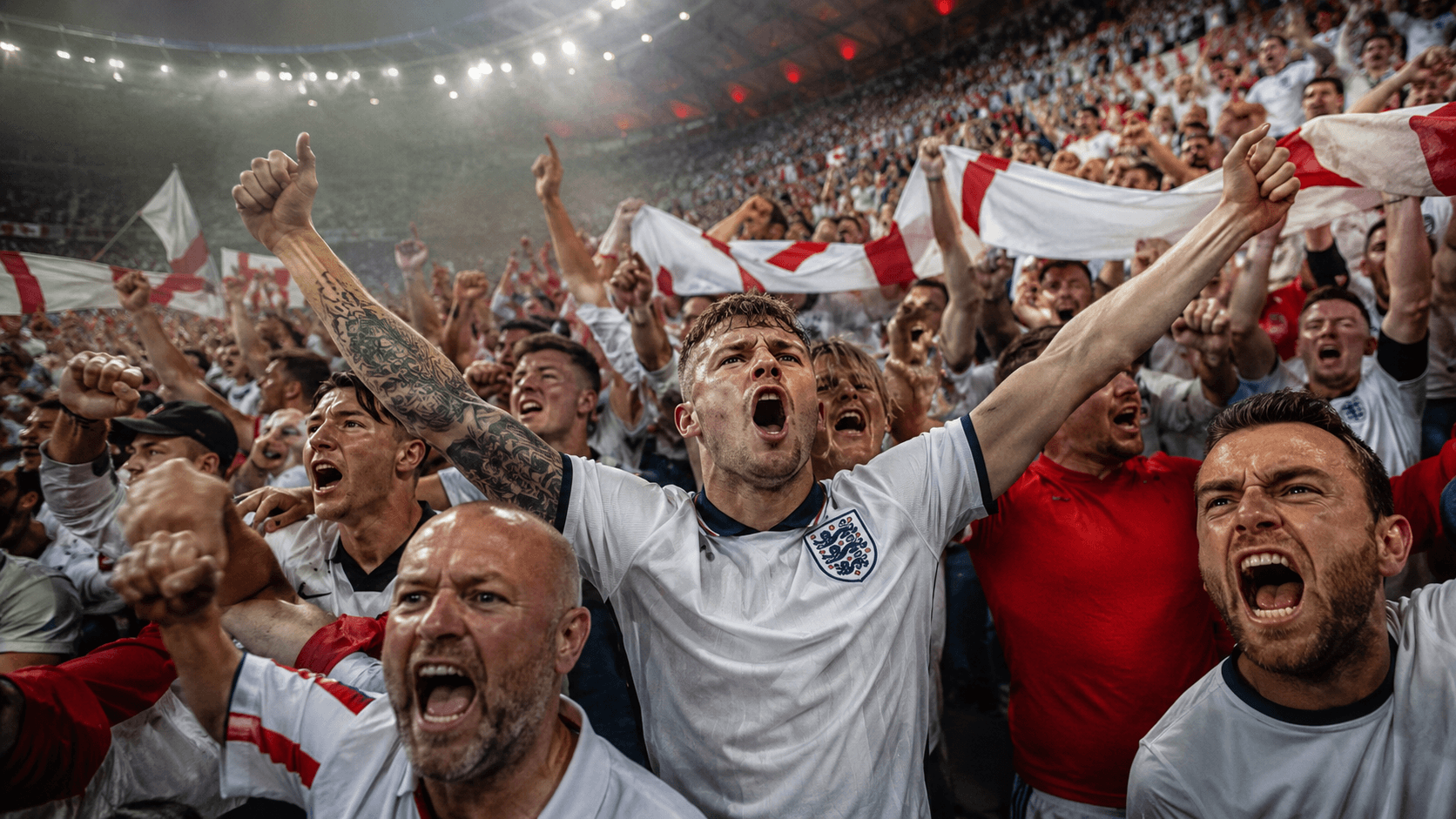
The weight of expectation: No other fanbase carries quite the same combination of hope and historical pain into a major tournament. Whether this acts as motivation or burden depends on how individually experienced players manage the psychological dimension of wearing an England shirt.
What Prediction Markets Suggest
In prediction markets, England typically feature among the top contenders — reflecting genuine squad quality — but rarely appear as outright favourites. The market’s assessment reflects the same dual reality: England are good enough to win it, but so are several other nations.
Platforms like Nexory offer World Cup prediction markets including winner forecasts, where you can participate in and track how collective expectations evolve as the tournament approaches.
World Cup Forecasting
Will 2026 Finally Be England’s Year?
Explore World Cup prediction markets on Nexory and participate in forecasting the tournament’s biggest outcomes — including England’s path to the final.
Explore Predictions on NexoryConclusion
England’s 2026 squad has the talent to win a World Cup — that statement, which would have sounded like wishful thinking in previous decades, is now an accurate description of where English football stands. The players are good enough.
But talent alone has never been sufficient. The tournament demands consistency over seven games, tactical adaptability, and resilience in high-pressure elimination matches. Whether sixty years of hurt finally ends in 2026 — or extends to sixty-four — remains genuinely uncertain. See also whether France can defend their title and which dark horses could cause upsets.
Frequently Asked Questions
When did England last win the World Cup?
England won the FIFA World Cup in 1966, defeating West Germany 4–2 in the final at Wembley Stadium. It remains their only major international title, and the 2026 tournament marks 60 years since that victory.
Has England ever reached the World Cup final other than 1966?
No. England’s best results beyond 1966 were semi-final appearances in 1990 and 2018. The 2020 Euro and 2024 Euro finals represent the closest they have come to a major international final in the intervening decades.
Who is England’s best player for the 2026 World Cup?
Jude Bellingham is widely regarded as England’s most influential and complete player, with Bukayo Saka and Harry Kane also central to the team’s attacking setup. England’s strength is that they have genuine quality across multiple positions rather than dependence on a single star.