China and Taiwan: How Prediction Markets Are Reading the Risk
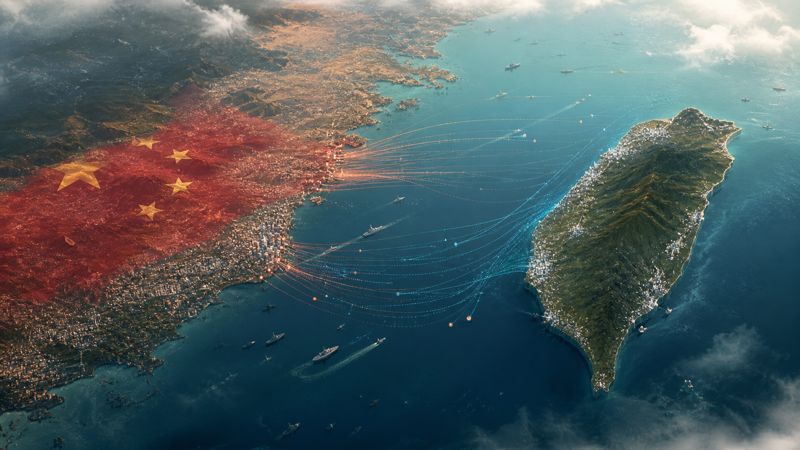
China and Taiwan: How Prediction Markets Are Reading the Risk
Category: Geopolitics | Reading time: ~8 min
This event is among the most closely tracked in geopolitical outcomes prediction markets are watching in 2026. The question of China and Taiwan occupies a unique position in geopolitical risk analysis. It is simultaneously one of the most discussed and most genuinely uncertain situations in international affairs — a scenario that has been described as the most consequential potential conflict of the 21st century, while remaining unresolved for decades.
Most coverage of the China-Taiwan situation is either dismissive (“it will never happen”) or alarmist (“war is inevitable”). Both framings reflect opinion, not rigorous probability assessment. Prediction markets offer a different kind of signal — one based on the aggregated expectations of many participants, updated continuously as conditions change.
This article examines what signals prediction markets use to assess the China-Taiwan risk, how those signals have shifted over time, and what the current collective probability landscape looks like — while maintaining the analytical neutrality that this topic requires.
Quick Answer
Prediction markets currently assign a meaningful but minority probability to a significant military escalation between China and Taiwan within a 5–10 year horizon. Most participants read the near-term risk (within 12 months) as substantially lower — reflecting the high costs and uncertainties involved for all parties. However, the probability distribution is notably wide, reflecting genuine disagreement among informed observers about how multiple key variables will develop.
What Prediction Markets Actually Measure Here
Before examining the signals, it is important to understand what prediction markets are measuring — and what they are not. A prediction market on China-Taiwan military conflict is measuring the collective expectation of a specific, defined outcome: a significant military action occurring within a stated timeframe. It is not measuring the wisdom of such an action, its legitimacy, or its geopolitical justification.
The price that emerges from collective participation reflects what informed observers believe is likely, not what is right. This distinction matters for interpreting the data correctly and maintaining the neutral analytical stance that this topic demands.
The Key Signals Forecasters Monitor
Forecasting the China-Taiwan situation requires tracking a specific set of indicators that have historically moved in advance of geopolitical escalation. These signals do not determine outcomes — but their movement shapes the probability distribution.
Military Posture and Exercise Patterns
The People’s Liberation Army conducts regular military exercises near Taiwan. Prediction market participants track both the frequency and scale of these exercises as a signal of intent and preparation. A significant escalation in exercise scope — particularly exercises that simulate specific operational scenarios such as blockade or amphibious landing — shifts probability assessments upward. Conversely, periods of reduced military activity tend to reduce near-term conflict probability estimates.
Taiwan’s Domestic Political Environment
Taiwan’s political outcomes — particularly its presidential and legislative elections — are closely monitored by forecasters. Different administrations have historically adopted different postures toward cross-strait relations, with implications for both the probability of provocation and the strength of the response framework. The composition of Taiwan’s government and its relationship with Washington is one of the most closely tracked variables in medium-term risk assessment.
US-China Relations and Deterrence Signals
The credibility of US deterrence is a central variable in China-Taiwan risk forecasting. Statements from senior US officials, arms sales to Taiwan, military-to-military contacts, and the broader state of US-China economic and diplomatic relations all feed into forecasters’ assessments of how Beijing calculates the cost of military action. Periods of US strategic ambiguity — where commitment to Taiwan’s defence appears less certain — consistently correlate with higher conflict probability estimates in prediction markets.
China’s Domestic Economic and Political Conditions
Forecasters who track authoritarian geopolitical risk consistently note that domestic economic stress can correlate with increased nationalist signalling and external distraction dynamics. China’s economic trajectory — growth rates, property sector health, youth unemployment — is monitored by prediction market participants as a contextual variable that influences the likelihood of an externally-focused political move.
The Semiconductor Factor
Taiwan’s position as the world’s dominant producer of advanced semiconductors — through TSMC — creates a unique economic deterrence dimension not present in most geopolitical risk scenarios. The global economic disruption that would result from a conflict affecting Taiwan’s semiconductor production capacity represents a cost that forecasters factor into their probability assessments on all sides of the question. Some analysts argue this creates a unique form of deterrence; others argue it creates a unique strategic motivation. Both views are represented in prediction market pricing.

The Range of Possible Scenarios
The China-Taiwan situation is not binary — it is not simply “conflict” or “no conflict.” Forecasters work with a spectrum of possible scenarios, each with its own probability and preconditions.
Scenario Spectrum — China-Taiwan
- Status quo continuation: Cross-strait tension remains elevated but below the threshold of direct military action. The most probable near-term scenario based on current signals.
- Increased grey zone activity: China escalates pressure through cyberattacks, economic coercion, and more aggressive military posturing without crossing into direct conflict. This scenario is already partially underway.
- Naval blockade: China imposes a partial or full blockade of Taiwan, testing international response without initiating direct territorial assault. A scenario with significant economic implications globally.
- Limited military action: A targeted strike or seizure of a small outlying island as a demonstration of intent — below the threshold of a full-scale invasion.
- Full-scale military operation: The lowest near-term probability scenario, but with the most significant global consequences if it occurred. Most forecasters assess this as more plausible in a 10+ year horizon than a 1–2 year window.
What Makes This Situation Uniquely Difficult to Forecast
Several characteristics of the China-Taiwan situation make it particularly resistant to confident probability assessment:
Deliberate ambiguity. All major actors — China, Taiwan, and the United States — maintain deliberate ambiguity about their red lines and intentions. This is a strategic choice: clear commitments would constrain flexibility. But it also means that the information most relevant to forecasting is precisely the information that is least available.
No historical precedent for this exact scenario. The combination of China’s current military capability, Taiwan’s democratic status, the semiconductor factor, and the current state of US-China relations represents a configuration without direct historical parallel. Base rate reasoning from other conflicts provides limited guidance.
The decision is made by a small group. Unlike democratic decisions that involve observable political dynamics, the ultimate decision about military action would be made by a small number of individuals within a political system with limited transparency. Their risk tolerance, timeframe, and domestic pressures are partially observable but never fully known.
How Prediction Markets Add Value Here
Given these difficulties, prediction markets do not eliminate uncertainty about China-Taiwan — they help structure it. Rather than a single analyst’s view, a market price reflects what a diverse group of informed observers collectively believe, weighted by their level of conviction. When a wide range of well-informed participants disagree significantly, the price reflects that disagreement — producing a wide probability distribution rather than false precision.
This is precisely where prediction markets are most useful: not in telling you what will happen, but in telling you honestly how much genuine uncertainty exists, and how that uncertainty is distributed across possible scenarios.
Track how collective expectations are shifting
Nexory aggregates crowd-based forecasts on geopolitical outcomes. Explore what current collective probability assessments look like for major global events.
Explore Geopolitical ForecastsConclusion
The China-Taiwan situation is one of the most important and genuinely uncertain geopolitical questions of the current era. A similarly uncertain situation is unfolding in the Russia-Ukraine conflict and ceasefire scenarios for 2026. Prediction markets read it as a situation with a meaningful but not dominant near-term conflict probability — with the probability distribution widening significantly over longer time horizons and shifting continuously with key signals.
The most useful contribution of prediction market analysis here is not a specific probability number. It is the framework: identifying which signals matter, how they move the probability distribution, and what scenarios become more or less plausible as conditions evolve. In a situation defined by deliberate ambiguity and limited transparency, structured probability thinking is more valuable than confident prediction in either direction.