AI Data Center Energy Demand 2026: Key Scenarios for Power Markets
Last updated: May 2026 · 8 min read
AI is no longer only a software story. In 2026, one of the most important questions around artificial intelligence is whether the physical infrastructure behind it can expand fast enough. Data centers need land, chips, cooling systems, grid connections, backup power, and long-term electricity supply.
That makes AI data center energy demand a major forecasting topic. The issue is not simply whether AI adoption continues. The more specific question is how much electricity AI infrastructure could require, which regions face the most grid pressure, and whether energy constraints could slow the pace of AI expansion.
Quick Answer
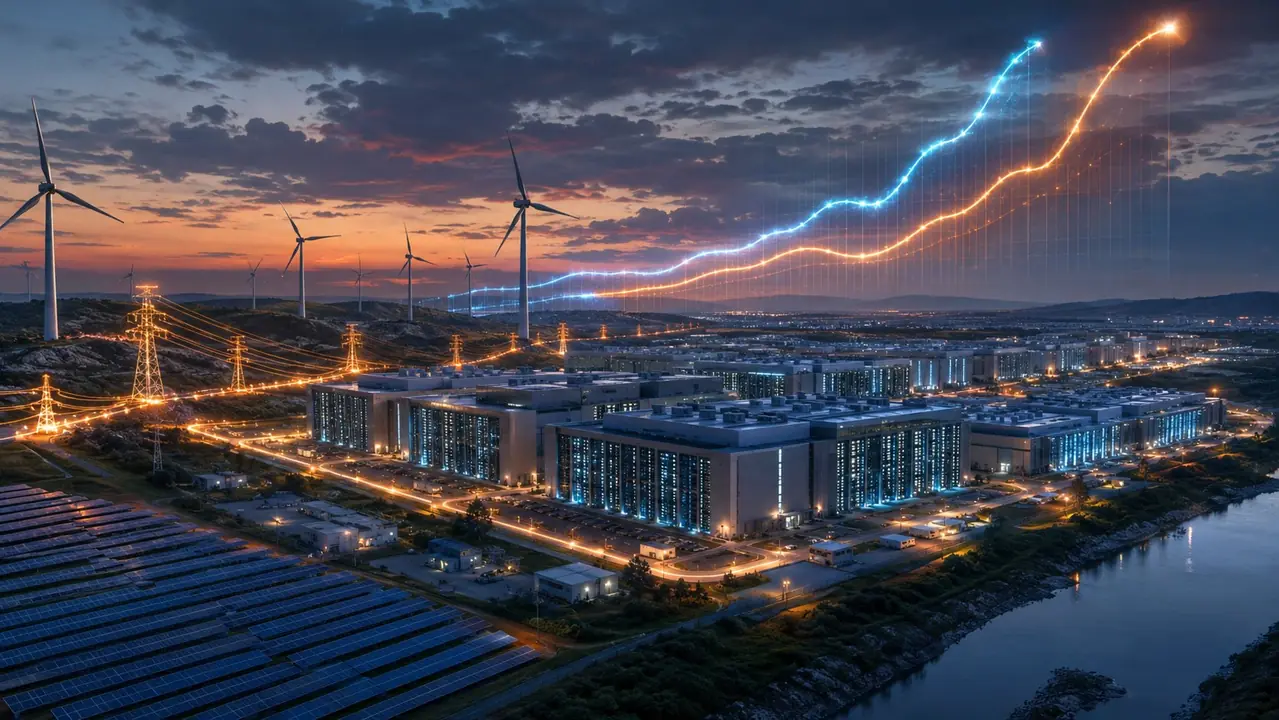
AI data center energy demand could become one of the defining infrastructure questions of 2026. Demand may rise quickly if hyperscalers continue building large AI campuses, but grid delays, energy costs, chip efficiency, cooling limits, and local resistance could slow the pace. The most likely outlook is not one global outcome, but a regional split between fast-build markets and constrained power markets.
Why AI Data Center Energy Demand Matters in 2026
AI models require large amounts of computing power. That computing power is concentrated in data centers, where thousands of processors run training, inference, storage, networking, and cooling systems. As AI usage expands from model training into everyday applications, electricity demand can become more persistent.
This changes the way investors, policymakers, utilities, and forecasters think about AI. The main constraint may not always be model quality or user adoption. It may also be whether enough power can be delivered to the right locations at the right time.
For broader context on the technology side of this theme, see our article on AI predictions for 2026. Energy demand is one of the infrastructure layers that could decide which AI scenarios are realistic.
Key Demand Drivers
- AI model usage — more inference requests can turn AI demand into a constant electricity load.
- Hyperscaler capex — large cloud companies are expanding data center capacity to support AI services.
- Chip density — advanced AI chips can increase compute per rack, but also intensify cooling and power delivery needs.
- Grid connection speed — even funded projects can be delayed if power infrastructure is not ready.
- Energy sourcing — long-term contracts for nuclear, renewables, gas, or hybrid power can shape where new campuses are built.
The Main Forecasting Question: Demand Growth or Grid Constraint?
The AI energy debate is often presented as a simple growth story. But the real forecasting question is more balanced: will data center power demand grow as planned, or will grid constraints force a slower buildout?
Both outcomes are plausible. On one side, AI companies have strong incentives to build more compute capacity. On the other side, electricity systems are physical networks with permitting delays, transmission bottlenecks, transformer shortages, interconnection queues, and regional reliability limits.
This is why AI infrastructure is becoming a power market issue. Forecasting AI demand now requires tracking not only software adoption, but also utility planning, generation capacity, cooling efficiency, transmission investment, and local policy decisions.
Three Scenarios for AI Data Center Energy Demand
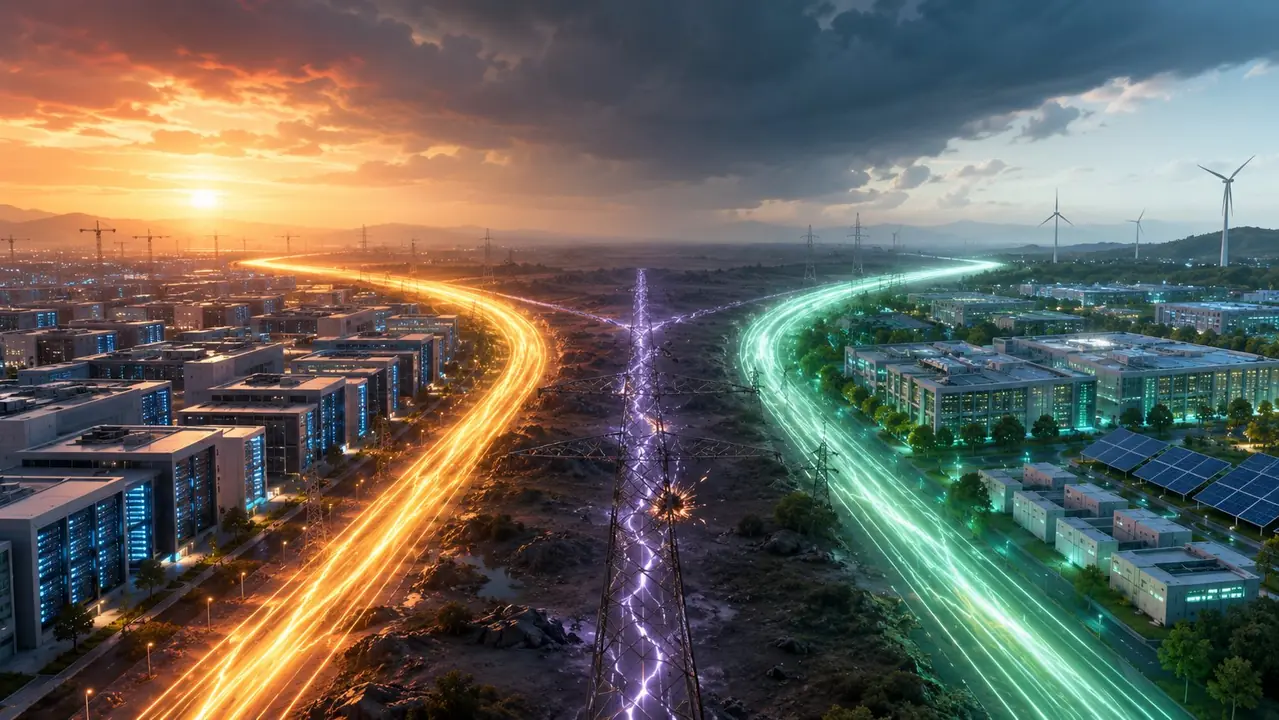
Possible Scenarios
- Rapid buildout scenario — hyperscalers secure power contracts, new campuses connect faster than expected, and AI demand becomes a major driver of electricity growth.
- Constrained buildout scenario — grid bottlenecks, permitting delays, and local opposition slow the pace of new capacity, especially in concentrated data center regions.
- Efficiency-led scenario — chip design, cooling systems, workload scheduling, and flexible power usage reduce the amount of electricity needed per AI task.
1. Rapid Buildout Scenario
In a rapid buildout scenario, demand for AI services remains strong and large technology companies continue expanding infrastructure aggressively. Data center operators secure long-term power agreements, utilities accelerate grid upgrades, and new generation capacity comes online.
This would support AI growth but could also create pressure on regional electricity prices, transmission systems, and fuel demand. The impact would be strongest in markets where data centers are clustered near existing fiber routes, cloud regions, and major customer bases.
2. Constrained Buildout Scenario
In a constrained scenario, AI demand remains high, but physical infrastructure slows expansion. This could happen if utilities cannot deliver enough new capacity, if transmission projects face delays, or if communities push back against water use, land use, noise, or electricity cost concerns.
This would not necessarily stop AI adoption. It could instead shift growth toward regions with cheaper power, faster interconnection, better cooling conditions, or more flexible regulatory environments.
3. Efficiency-Led Scenario
In an efficiency-led scenario, hardware and software improvements reduce the energy intensity of AI. More efficient chips, better cooling, model optimization, workload scheduling, and grid-aware computing could allow more AI activity without a proportional rise in electricity use.
This scenario is important because AI energy demand is not fixed. It depends on what kinds of models are used, where workloads run, how often they are queried, and whether operators can shift non-urgent tasks to periods of lower grid stress.
What Power Markets Should Watch
The most important signals are not only technology announcements. Power market observers should track utility interconnection queues, new data center permits, corporate power purchase agreements, nuclear and renewable energy deals, transformer availability, and local political responses.
They should also watch whether AI workloads become more flexible. If data centers can reduce or shift power demand during peak grid stress, the sector may become easier to integrate. If demand remains inflexible, the pressure on power systems could be more severe.
This links AI infrastructure to broader financial and macro questions. Data center energy demand may influence utility investment, power prices, inflation pressure, and equity market expectations. For the broader market context, see our stock market forecast for 2026.
Follow Market Expectations
Explore Technology and Market Forecasts on Nexory
Nexory lets users follow real-world forecasts across technology, crypto, finance, politics, sports, and global events as expectations change over time.
Explore PredictionsConclusion: AI Growth Is Becoming an Energy Forecast
AI data center energy demand in 2026 is best understood as a scenario question. Demand could rise quickly, but the final outcome depends on grid capacity, power sourcing, hardware efficiency, cooling technology, local regulation, and corporate investment decisions.
The key point is that AI infrastructure is becoming more visible in real-world energy systems. Forecasting the next phase of AI now requires watching not only model releases, but also electricity markets, utilities, power plants, transmission lines, and local communities.
Frequently Asked Questions
Why do AI data centers use so much electricity?
AI data centers use electricity for processors, memory, storage, networking, cooling, and backup systems. The largest demand comes from high-density computing hardware used for training and running AI models.
Could AI data center growth strain power grids?
Yes, especially in regions where many data centers are concentrated. The risk depends on transmission capacity, generation supply, interconnection timelines, and whether data centers can operate flexibly during peak demand periods.
Will better chips reduce AI energy demand?
More efficient chips can reduce energy use per AI task, but total electricity demand may still rise if AI usage grows faster than efficiency improves.
What should forecasters watch in 2026?
Key signals include utility load forecasts, data center permits, grid connection delays, corporate power deals, chip efficiency trends, cooling technology, and local policy responses.