48-Team World Cup 2026: How the New Format Changes Everything
Last updated: May 2026 · 8 min read
The 2026 FIFA World Cup is not just another edition of the world’s biggest sporting event. It marks the most significant structural change in the tournament’s modern history: the expansion from 32 to 48 teams. More nations, more matches, more drama — and more uncertainty for every forecaster and fan tracking the outcome.
This is the first World Cup to feature 48 nations, and the implications ripple through every aspect of the tournament — from how the group stage operates to how favourites manage their squads across a longer competition, and how prediction markets must now account for a significantly wider range of possible outcomes.
Quick Answer
The 2026 World Cup expands to 48 teams across 12 groups of 4. The top 2 from each group, plus the 8 best third-placed teams, advance to a new Round of 32. Total matches increase from 64 to 104 — a 62.5% increase. The format demands greater squad depth, increases upset potential, and creates new strategic calculations for every competing nation.
The Format in Numbers: Old vs. New
2026 Format vs. 1998–2022
| Element | 1998–2022 | 2026 |
|---|---|---|
| Teams | 32 | 48 |
| Groups | 8 × 4 | 12 × 4 |
| Teams advancing | 16 (top 2 each group) | 32 (top 2 + best 8 third-place) |
| Knockout entry round | Round of 16 | Round of 32 (new) |
| Total matches | 64 | 104 |
| Host nations | 1 (typical) | 3 (USA, Canada, Mexico) |
Host Nations and Venues
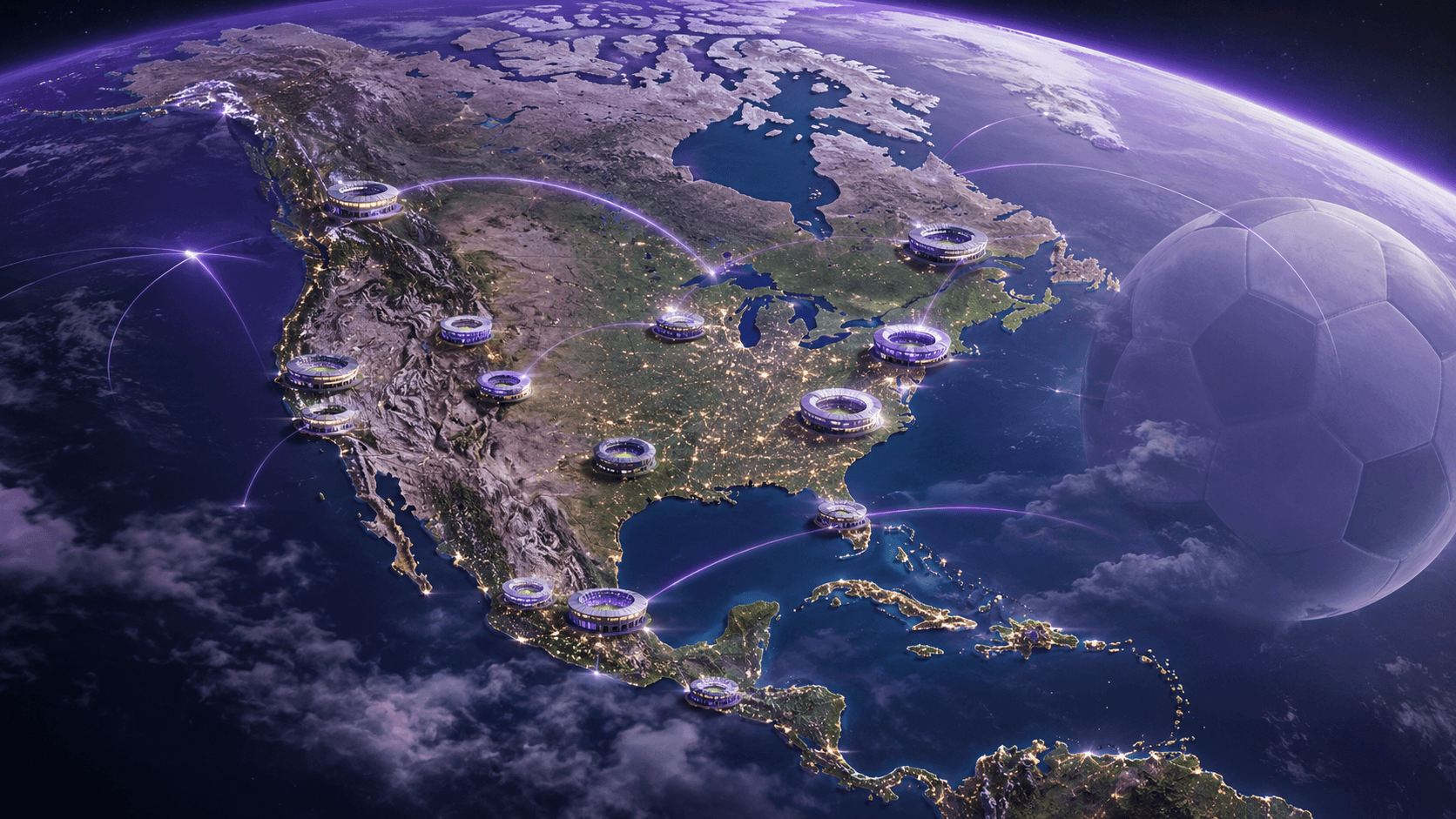
The 2026 World Cup is co-hosted by the United States, Canada, and Mexico — the first tournament ever staged across three nations simultaneously. Matches will be played across 16 cities:
United States (11 cities): New York/New Jersey, Los Angeles, Dallas, San Francisco Bay Area, Seattle, Boston, Miami, Atlanta, Kansas City, Houston, Philadelphia.
Mexico (3 cities): Mexico City, Guadalajara, Monterrey.
Canada (2 cities): Toronto, Vancouver. The final will be held at MetLife Stadium in New Jersey, with a capacity of over 82,000.
How the Expansion Changes the Competition
Squad Depth Becomes a Decisive Factor
Nations that reach the final could play ten games in five weeks — three group matches plus seven knockout games. Managing player load, rotation, and fitness across a longer competition is a significant tactical and medical challenge. Squads with genuine quality beyond their starting eleven have a structural advantage that did not exist to the same degree in the 32-team format.
Third-Place Teams Can Still Advance
The format’s most important new rule: the 8 best third-placed finishers from the 12 groups advance to the Round of 32. This creates different strategic incentives in the group stage. A team that has already secured advancement in two matches may rationally rest key players in the third — influencing how the knockout draw resolves.
Global Representation Increases Significantly
The expansion to 48 teams substantially increases representation from Africa (5 to 9 places), Asia (4.5 to 8 places), CONCACAF (3.5 to 6 places), and South America (4.5 to 6 places). This creates more opportunities for nations from emerging football regions to make an impact — and more potential for the kind of upsets that generate lasting tournament memories.
Implications for Forecasting and Prediction Markets
The format change creates genuinely new uncertainty for anyone attempting to forecast tournament outcomes. More teams, more matches, and a new Round of 32 stage means the probability distribution of outcomes is wider than in previous editions. The chance of a traditional powerhouse suffering an early shock exit — already demonstrated in recent tournaments — increases with expanded exposure to the group stage and new knockout rounds.
Prediction markets reflect this uncertainty. Platforms like Nexory allow users to participate in forecasting tournament outcomes with this new complexity in mind — from group qualification to individual match results and the eventual champion.
Tournament Forecasting
The New Format Creates More Uncertainty — and More to Forecast
Nexory’s prediction markets cover 2026 World Cup outcomes across group stages, knockouts, and the final — tracking how collective expectations evolve as the tournament unfolds.
Explore Predictions on NexoryConclusion
The 48-team World Cup is a fundamentally different tournament to anything that has come before in the modern era. It demands more from every competing nation — particularly the traditional powers who can no longer treat the expanded group stage as a formality. It creates more opportunity for the unexpected, more drama across a longer competition, and a genuinely wider range of possible outcomes.
For fans and forecasters alike, the 2026 World Cup is more unpredictable than any edition in recent memory. Related reading: group stage predictions and key dynamics, who will win the 2026 World Cup, and which dark horses could benefit from the expanded format.
Frequently Asked Questions
Why did FIFA expand the World Cup to 48 teams?
FIFA’s stated rationale includes increasing global participation and football development across more nations — particularly in Africa, Asia, and the Americas. The expansion also significantly increases commercial revenue from additional matches, broadcasting rights, and the involvement of more national football associations and their fan bases.
How many matches will be played at the 2026 World Cup?
The 2026 World Cup will feature 104 matches — a 62.5% increase from the 64 matches played in the 32-team format used from 1998 to 2022. This includes 48 group stage matches and 56 knockout matches from the Round of 32 through to the final.
When does the 2026 World Cup start and end?
The 2026 FIFA World Cup is scheduled to run from June 11 to July 19, 2026, across the United States, Canada, and Mexico — a 38-day tournament, the longest in the event’s history.