Syria After Assad: Reconstruction, Instability Risk, and the 2026 Outlook
Last updated: June 2026 · 9 min read
The fall of Bashar al-Assad in late 2024 ended more than five decades of Assad family rule in Syria. What followed was not a clean transition but a complex, contested process involving multiple armed factions, competing regional powers, a shattered economy, and a population that had endured more than a decade of devastating civil war.
In 2026, Syria remains one of the most complex geopolitical situations in the world — a country attempting to rebuild political institutions and physical infrastructure while managing the competing interests of Turkey, Iran, Gulf states, Russia, and the West. This article examines where Syria stands, what the realistic scenarios are, and how forecasters are reading the trajectory.

Quick Answer
Syria in 2026 is in fragile transition — not stable, but not in full civil war. The most likely near-term scenario is a contested, slow stabilisation with significant pockets of instability. Reconstruction is beginning but is hampered by competing external interests, remaining sanctions, and weak institutions. A return to large-scale civil conflict cannot be excluded, but most forecasters assign it lower probability than continued fragile transition.
Syria After Assad: What Changed and What Didn’t
Assad’s fall removed the most immediate cause of Syria’s civil war — the regime — but it did not resolve the underlying tensions that made Syria ungovernable. The country remains divided between multiple armed factions with different visions for its future, different external patrons, and different territorial bases.
Hayat Tahrir al-Sham (HTS), the Islamist faction that played a central role in the final offensive against Assad, controls significant territory in northwestern Syria and has been the dominant political force in the transitional government. It has made some pragmatic moves toward governance — managing basic services, engaging with international diplomats — but its Islamist orientation and designation as a terrorist organisation by the US and EU creates significant obstacles to international recognition and reconstruction financing.
Kurdish-led forces control northeastern Syria and have their own governance structures. Turkey regards the Kurdish YPG/SDF forces as a terrorist threat and has used military force against them. The presence of US troops in the northeast has provided some protection, but the Trump administration’s interest in reducing overseas military commitments creates uncertainty about how long that protection will hold.
In the south, tribal dynamics, former regime remnants, and various armed groups create a patchwork of local power that does not easily map onto a unified national framework. ISIS has not been eliminated — it retains a capacity for insurgent attacks in central and eastern Syria.
The External Actors: Competing Visions for Syria’s Future
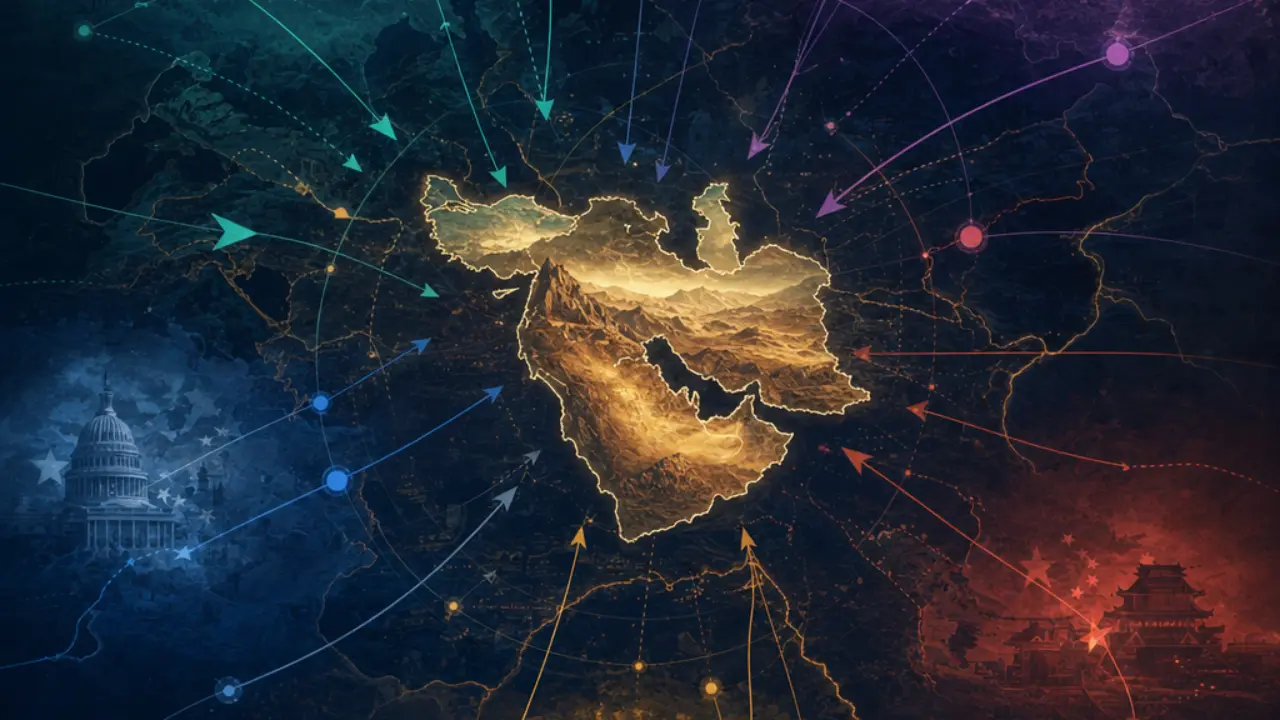
Syria’s trajectory in 2026 is significantly shaped by external actors whose interests diverge in important ways:
Key External Actors
- Turkey — wants to eliminate Kurdish military presence near its border, prevent a Kurdish state in northern Syria, and have influence over the transitional government. Has military forces inside Syria and significant leverage over HTS.
- Gulf states (Saudi Arabia, UAE, Qatar) — competing visions for Syria’s future, but united in interest in preventing Iranian influence and securing reconstruction contracts. Qatar has better relations with HTS; Saudi Arabia and UAE are more cautious.
- Iran — lost its most important land corridor to Lebanon with Assad’s fall. Has residual influence through Shia militias in some areas but its position is significantly weakened.
- Russia — lost its primary client in the region. Retains military bases at Tartus and Hmeimim but their future is uncertain under any new Syrian government.
- United States — maintains troops in northeastern Syria but Trump administration interest in withdrawal is high. Focused on ISIS containment but less interested in broader stabilisation investment.
- Europe and the UN — interested in stabilisation as a means of reducing refugee pressure on Europe. Willing to provide reconstruction financing but conditioned on governance reforms and HTS moderation.
Three Scenarios for Syria in 2026
Scenario 1: Fragile Transition and Partial Stabilisation (Most Likely)
The transitional government maintains nominal control over major cities and the northwest but lacks the capacity to project authority across the full territory. Reconstruction begins in areas under relative stability, primarily financed by Gulf states with European support. The HTS-led government makes some moderation gestures sufficient to unlock partial sanctions relief. Kurdish forces and the transitional government reach a fragile accommodation mediated by Turkey and the US. ISIS continues low-level insurgent activity. Most forecasters consider this the most probable near-term outcome.
Scenario 2: Renewed Fragmentation and Conflict
Tensions between HTS and other factions escalate into armed conflict. Turkey-Kurdish clashes intensify as US troops withdraw from the northeast. Gulf state competition for influence funds rival armed groups. A new phase of civil conflict breaks out in multiple regions simultaneously. International reconstruction efforts stall. ISIS exploits the chaos to rebuild. This scenario is considered plausible (20–30% probability) but not the base case.
Scenario 3: Accelerated Stabilisation and Reconstruction
HTS and the transitional government make sufficient governance concessions to unlock international recognition, US and EU delisting, and large-scale reconstruction financing. A political framework acceptable to Kurds, Arab tribes, and minority communities is negotiated under UN auspices. Saudi-led Gulf investment flows into infrastructure. Syrian refugees begin returning in significant numbers. This is the optimistic scenario — low probability in 2026, but the direction international diplomacy is attempting to move toward.
The Reconstruction Challenge
Syria’s reconstruction needs are enormous. The World Bank has estimated reconstruction costs in the hundreds of billions of dollars — a figure that dwarfs the financial capacity of any single actor. The challenge is not only financial: it is also political. Reconstruction financing from Western sources comes with governance conditions that the transitional government may struggle or be unwilling to meet.
The sanctions question is central. US and EU sanctions imposed on the Assad regime remain partially in place, creating legal uncertainty for international businesses considering Syria investment. The Trump administration has shown some willingness to ease sanctions as part of broader Middle East diplomacy — particularly if it serves Gulf state interests — but full removal requires congressional action that is not yet forthcoming.
The refugee question adds pressure. More than six million Syrians remain abroad, primarily in Turkey, Lebanon, Jordan, and Europe. Their return is a priority for host countries, but return requires security, economic opportunity, and housing that does not yet exist at scale.
Follow Middle East Forecasts
Track Syria and Regional Risk on Nexory
Nexory’s prediction markets reflect how collective expectations shift as post-conflict transitions unfold — from Syria reconstruction to broader Middle East stability scenarios.
Explore Geopolitical PredictionsConclusion: A Long Road, Uncertain Destination
Syria in 2026 is a country that has escaped one catastrophe but has not yet arrived at stability. The transition from Assad’s rule to something better is real but contested, slow, and fragile. The international community is engaged but divided.
For forecasters and prediction markets, Syria represents one of the most complex scenarios to model — too many actors, too many variables, too little reliable information. The range of outcomes remains wide. What is clear is that the next 12–24 months will be decisive for whether Syria moves toward fragile stabilisation or back toward renewed conflict.
Frequently Asked Questions
What is happening in Syria in 2026 after Assad?
Syria is in a contested transitional period. An HTS-led transitional government controls major cities and the northwest but lacks full territorial authority. Reconstruction is beginning in stable areas while Kurdish forces maintain control in the northeast and ISIS retains insurgent capacity in central and eastern regions.
Is Syria stable in 2026?
Syria is not fully stable in 2026, but it is not in large-scale civil war either. The most accurate description is fragile transition — pockets of stability where reconstruction is proceeding, alongside areas of ongoing insecurity, factional tension, and ISIS insurgent activity.
Who controls Syria after Assad in 2026?
No single actor controls all of Syria. The HTS-led transitional government holds nominal authority over major cities. Kurdish-led forces (SDF) control northeastern Syria. Turkey has a military presence in the north. Various tribal and armed groups hold local power in different regions.
How much will Syria reconstruction cost?
World Bank estimates put Syria’s reconstruction needs in the hundreds of billions of dollars. The challenge is both financial and political — Western financing comes with governance conditions, Gulf state financing with competing political interests, and US and EU sanctions create legal uncertainty for international investors.
Will Syrian refugees return home in 2026?
Some refugees are returning, particularly to areas of relative stability in the northwest. However, large-scale return is constrained by lack of housing, limited economic opportunity, and security concerns. More than six million Syrians remain abroad. Meaningful return at scale would require sustained stability and reconstruction that does not yet exist.