How Middle East Conflict Affects Oil Prices: Scenarios and Risk Factors
Last updated: May 2026 · 9 min read
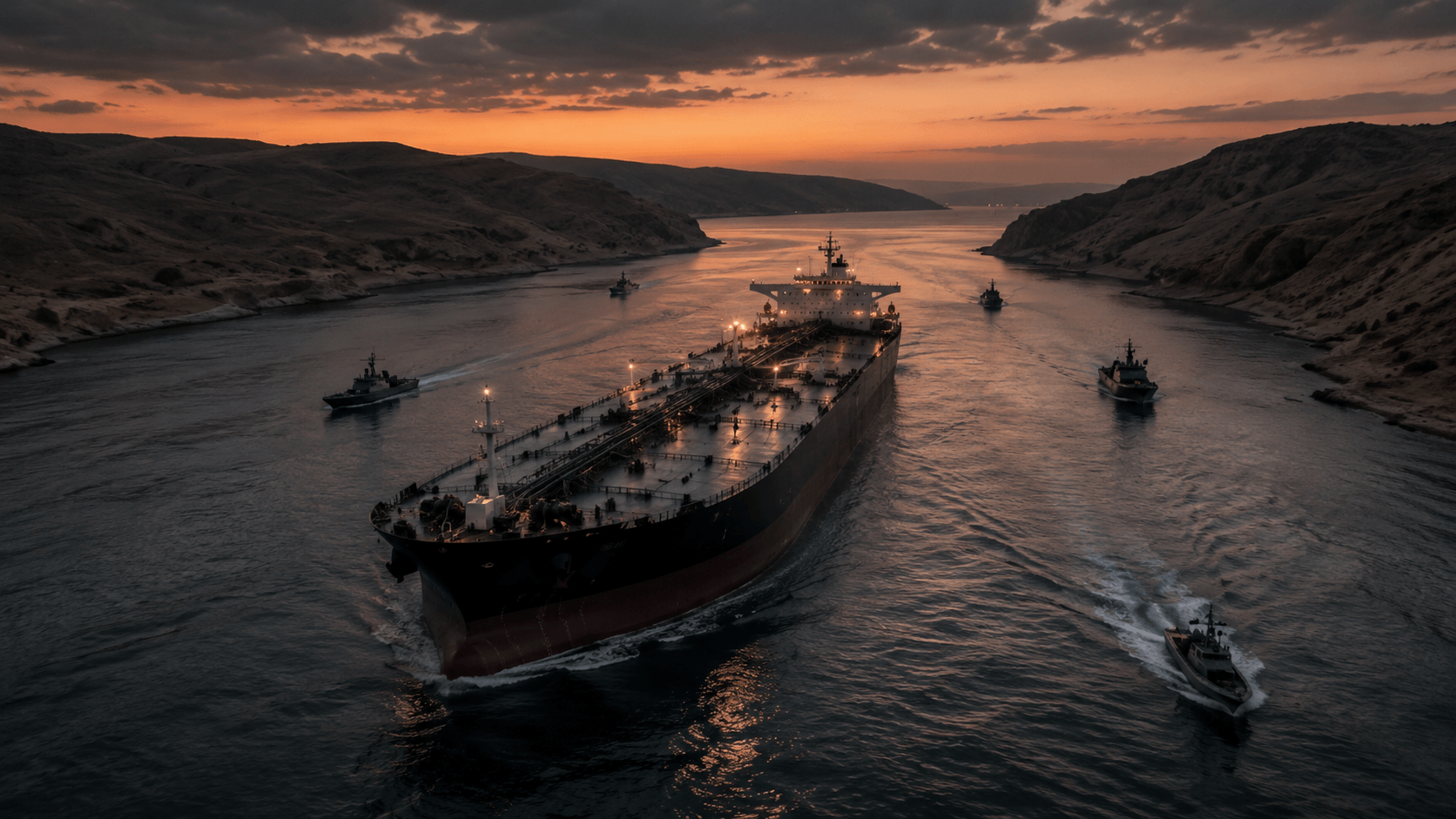
The Middle East sits at the center of global oil supply. The region accounts for roughly a third of world crude oil production and controls the Strait of Hormuz — a narrow waterway through which nearly 20 percent of all traded oil passes every day.
When tensions rise in the region — whether through direct military conflict, proxy warfare, sanctions, or threats to shipping lanes — oil markets respond quickly. Prices can spike on the expectation of disruption alone, even before any physical supply is interrupted.
This article examines the mechanisms behind that relationship, the key risk zones that matter most in 2026, and the scenarios that could drive oil prices meaningfully higher or lower from current levels.
Quick Answer
Middle East conflicts affect oil prices through two main channels: physical supply disruption and risk premium. Even when oil supply is not physically interrupted, the threat of disruption can add $5–15 per barrel to crude prices. The severity of the impact depends on which countries are involved, whether key transit routes like the Strait of Hormuz are threatened, and how quickly alternative supply sources can respond.
Why the Middle East Has Outsized Influence on Oil Markets
The scale of Middle Eastern oil production is the starting point. Saudi Arabia, Iraq, the United Arab Emirates, Kuwait, and Iran collectively produce a significant share of the world’s crude oil. Saudi Arabia alone can move global prices through its production decisions within OPEC+.
But production volume is only part of the picture. Geography amplifies the region’s influence. The Strait of Hormuz, located between Iran and Oman, is a 33-kilometer-wide passage through which roughly 17–20 million barrels of oil flow daily. There is no practical alternative route for most of that volume. A credible threat to close or constrain the strait — even if never acted upon — is enough to move futures markets sharply.
The Red Sea adds another dimension. Houthi attacks on commercial shipping in 2024 and 2025 forced major carriers to reroute around the Cape of Good Hope, significantly increasing transit times and costs. While this does not directly cut oil supply, it raises logistics costs and adds uncertainty to energy markets globally.
Key Factors That Give the Middle East Oil Market Leverage
- Production scale — the region holds a substantial share of global proven reserves and daily output
- Strait of Hormuz — the world’s most critical oil transit chokepoint with no practical bypass
- OPEC+ coordination — Saudi Arabia and Gulf states can adjust output in response to geopolitical conditions
- Iran sanctions exposure — shifts in Iran’s ability to export oil directly affect global supply levels
- Red Sea shipping lanes — disruptions increase energy logistics costs and delivery uncertainty
How Conflict Translates Into Oil Price Movement
The connection between conflict and oil prices operates through two distinct mechanisms. Understanding both is important because they can produce different outcomes depending on how a situation develops.
The Risk Premium
When conflict risk rises, oil traders price in the probability that supply could be disrupted in the future. This is known as the geopolitical risk premium. It represents the additional cost that markets attach to crude oil above what supply and demand fundamentals alone would justify.
The premium tends to be largest when the threat is credible and the affected area is strategically significant. A military escalation involving Iran, for example, carries a much higher premium than conflict in a country with limited production or export capacity.
Risk premiums can also deflate quickly. If tensions ease or a diplomatic channel opens, prices may give back gains rapidly — even if the underlying situation remains unresolved.
Physical Supply Disruption
A second and more lasting impact comes from actual physical interruption — pipeline attacks, infrastructure damage, port closures, or sanctions that prevent a country from exporting. This type of disruption removes real barrels from the market and requires other producers to compensate. If OPEC+ spare capacity is available and willing to deploy, the impact can be contained. If spare capacity is limited or producers choose not to act, the supply shortfall can sustain higher prices for months.
The Key Risk Zones in 2026
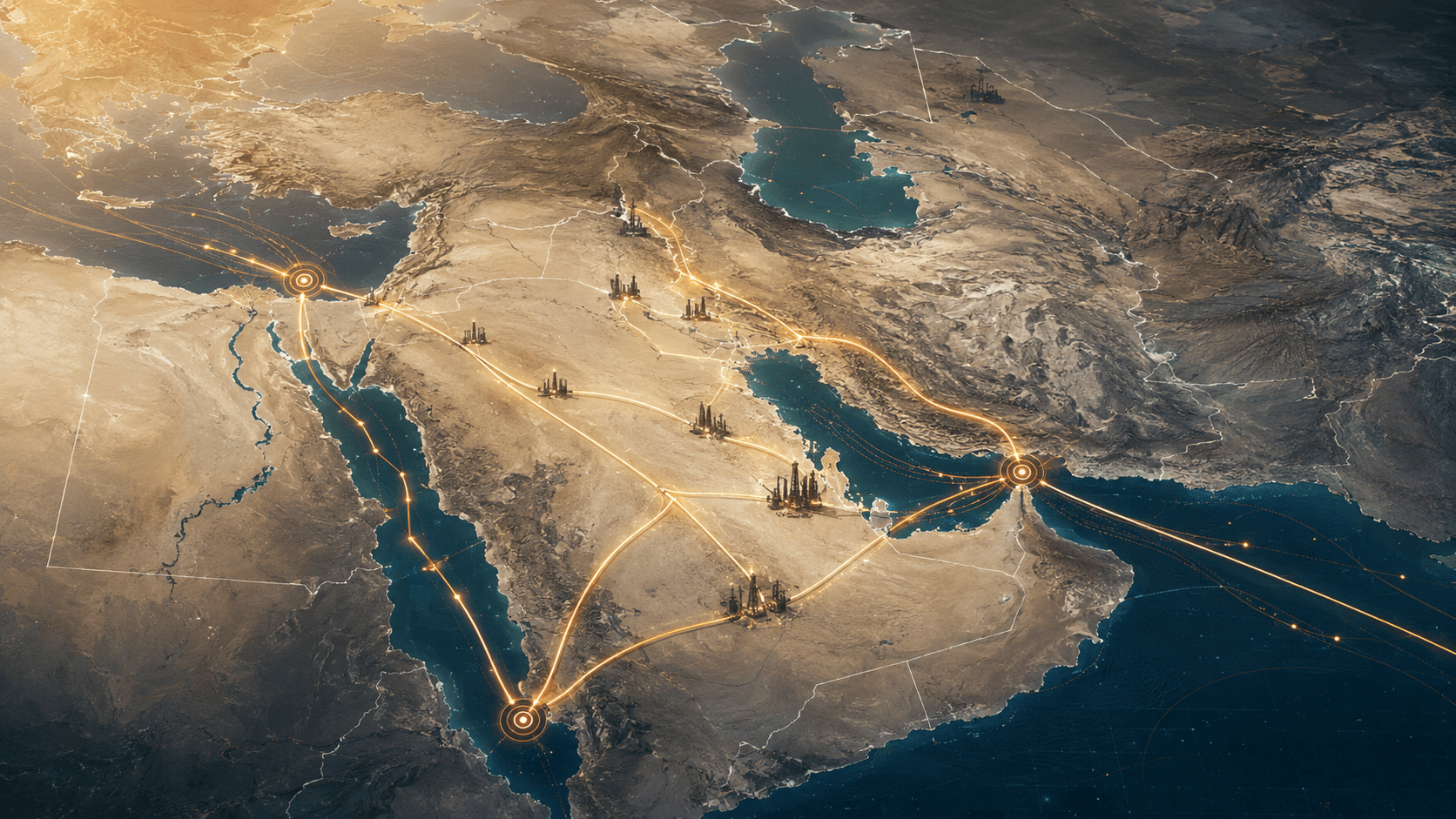
Several distinct flashpoints are shaping the Middle East oil risk picture in 2026. Each carries different implications for supply, prices, and the broader macro outlook.
Iran: Sanctions, Nuclear Talks, and Hormuz
Iran is the central variable. The country holds substantial oil reserves and has historically used its proximity to the Strait of Hormuz as leverage in diplomatic negotiations. The status of US-Iran relations — whether sanctions tighten, ease, or remain frozen — directly affects how much Iranian crude reaches the global market.
A deterioration in relations, particularly around the nuclear program, raises the probability of confrontation. Any credible threat to close or mine the Strait of Hormuz would likely trigger an immediate and substantial oil price spike. Even without closure, the threat alone has historically been sufficient to push Brent crude higher.
Yemen and Red Sea Shipping
Houthi missile and drone attacks on commercial vessels in the Red Sea have disrupted one of the world’s most important shipping corridors. Most tankers and container ships have rerouted around Africa, adding roughly two weeks of transit time and significantly increasing costs.
The disruption does not directly reduce oil supply, but it raises the cost of moving energy commodities globally, contributes to inflationary pressure, and signals that non-state actors can impose meaningful costs on global trade even without major-power backing.
Israel and Regional Escalation Risk
The conflict in Gaza and broader tensions involving Hezbollah, Iran, and other regional actors have created ongoing uncertainty. Israel is not a major oil producer, but the risk of a wider regional war — one that draws in Iran directly or threatens Gulf state infrastructure — is the scenario oil markets watch most closely.
Saudi Arabian and UAE infrastructure, including oil export terminals and processing facilities, are within range of regional missile capabilities. A scenario in which these facilities are directly targeted would represent a severe supply shock with limited short-term alternatives.
Three Scenarios for Oil Prices and Middle East Tensions
Rather than a single forecast, the relationship between Middle East conflict and oil prices is best understood through scenarios. Each reflects a different combination of diplomatic outcomes, military escalation, and supply response.
Scenario 1 — Escalation
What it means: Direct Iran involvement in regional conflict, credible Hormuz closure threat, or strikes on Gulf infrastructure.
Oil price implication: Brent crude could move significantly above current levels. A severe Hormuz scenario would represent one of the most disruptive supply shocks in decades.
Probability: Lower, but the tail risk is large. Markets price this scenario with a persistent risk premium even at low probability.
Scenario 2 — Status Quo / Managed Tension
What it means: Conflict continues at current intensity — Red Sea disruptions persist, sporadic regional incidents occur, but no major escalation materializes.
Oil price implication: Prices likely remain range-bound with a moderate risk premium baked in. Demand conditions and OPEC+ production policy become the dominant price drivers.
Probability: This is the base case for most market participants heading into mid-2026.
Scenario 3 — De-escalation / Diplomatic Progress
What it means: Ceasefire agreements, Iran nuclear talks progress, sanctions easing, or reduced Houthi activity in the Red Sea.
Oil price implication: Risk premium deflates. If Iran sanctions ease meaningfully, additional Iranian barrels entering the market could add downward pressure on prices — potentially reinforcing a broader softening trend if demand growth is also weak.
Probability: Possible but dependent on multiple simultaneous diplomatic breakthroughs. Markets assign this a lower probability in the near term.
How This Connects to the Broader Economic Picture
Oil prices do not operate in isolation. A sustained spike driven by Middle East escalation would feed directly into inflation, transportation costs, and manufacturing input prices. Central banks monitoring inflation would face a more difficult environment, potentially delaying interest rate cuts or forcing them to respond to an external supply shock they cannot control through monetary policy.
For the global recession outlook in 2026, a significant oil price spike would represent a meaningful headwind — particularly for oil-importing economies in Europe and Asia. The path for inflation would also shift materially if energy costs rose sharply.
Conversely, a de-escalation scenario — especially one involving Iranian sanctions relief — could bring additional supply to markets at a time when OPEC+ is already under pressure to maintain output discipline. That combination could push prices lower, providing relief for inflation but potentially challenging producer-economy budgets.
The oil price forecast for 2026 depends partly on which of these geopolitical scenarios plays out — making Middle East dynamics one of the key variables to track alongside demand trends and OPEC+ production decisions. It also connects to broader questions about how ongoing conflicts in other regions are reshaping global energy flows.

What to Watch: Key Indicators and Signals
For those following the oil-geopolitics relationship, several indicators are worth monitoring closely as situations develop.
Signals That Could Shift the Oil Price Outlook
- Iran-US diplomatic contact — any resumption of nuclear talks tends to reduce the risk premium on crude
- Strait of Hormuz shipping data — changes in tanker traffic or insurance rates signal real market concern
- OPEC+ production decisions — producer response to conflict-driven price spikes shapes how sustained any rally is
- Red Sea shipping volumes — a return of normal traffic would reduce logistics costs across energy markets
- US strategic petroleum reserve activity — releases signal how seriously policymakers view supply disruption risk
- Saudi infrastructure security — any credible threat to Aramco facilities represents a high-impact, low-frequency risk
See Forecasting in Action
Follow Geopolitical and Energy Forecasts on Nexory
Nexory allows users to participate in prediction markets covering geopolitical outcomes, energy markets, and global events — and observe how collective expectations evolve as situations develop.
Explore Predictions on NexoryConclusion
Middle East conflict affects oil prices through a combination of risk premium and the potential for real supply disruption. The region’s geographic concentration of production and the strategic importance of the Strait of Hormuz mean that even relatively contained conflicts can have outsized market effects.
In 2026, the key variables are Iran’s diplomatic and military posture, the continuation or resolution of Red Sea shipping disruptions, and the risk of broader regional escalation. None of these follow a predictable trajectory — which is precisely why scenario-based thinking, rather than a single-point forecast, is the more useful framework for anyone tracking the relationship between geopolitics and energy markets.
The baseline remains a world where tension persists but does not escalate sharply — but the distribution of possible outcomes is wide, and the tail risks are asymmetric. A severe disruption scenario is low probability but high impact. That asymmetry is what keeps the geopolitical risk premium alive in oil markets even during periods of relative calm.
Frequently Asked Questions
How much can a Middle East conflict raise oil prices?
It depends on the severity and location of the conflict. A credible threat to the Strait of Hormuz can add $10–20 per barrel in risk premium within days. An actual closure of the strait — even temporary — would represent a far more severe shock given that roughly 20 percent of globally traded oil passes through it. Historical episodes like the Gulf War in 1990 saw crude prices roughly double before supply concerns eased.
Why does the Strait of Hormuz matter so much for oil?
The Strait of Hormuz is a 33-kilometer-wide passage connecting the Persian Gulf to the Arabian Sea. It is the only sea route out of the Gulf, through which Saudi Arabia, Iraq, the UAE, Kuwait, and Iran export most of their oil. There is no practical pipeline alternative for the bulk of this volume, which makes the strait uniquely vulnerable as a single point of failure in global energy supply.
Does de-escalation always push oil prices lower?
Not always. De-escalation removes the risk premium, which creates downward pressure on prices. However, the overall direction also depends on demand conditions, OPEC+ supply decisions, and broader macroeconomic factors. If de-escalation leads to Iranian sanctions relief and more barrels entering the market, the downward pressure can be more sustained. If other supply constraints exist, the price impact of reduced tension may be limited.
How do Red Sea disruptions affect oil prices?
Red Sea disruptions do not directly reduce oil supply but they raise shipping costs and create uncertainty in energy logistics. When tankers reroute around Africa, transit times increase by roughly two weeks and freight costs rise. This contributes to higher delivered energy prices, adds to inflation in importing regions, and reinforces the broader risk premium in oil markets — particularly when combined with other regional tensions.
Can OPEC+ offset a Middle East supply disruption?
Potentially, if spare capacity is available and producers are willing to deploy it. Saudi Arabia has historically used spare production capacity to stabilize markets during crises. However, if the disruption is large enough, or if other OPEC+ members are also affected by the conflict, the ability to offset supply losses is limited. The scale of available spare capacity at any given time is therefore a key variable in assessing how severe and sustained a price spike could be.