Brazil Election 2026: Key Scenarios for Latin America and Global Markets
Last updated: May 2026 · 8 min read
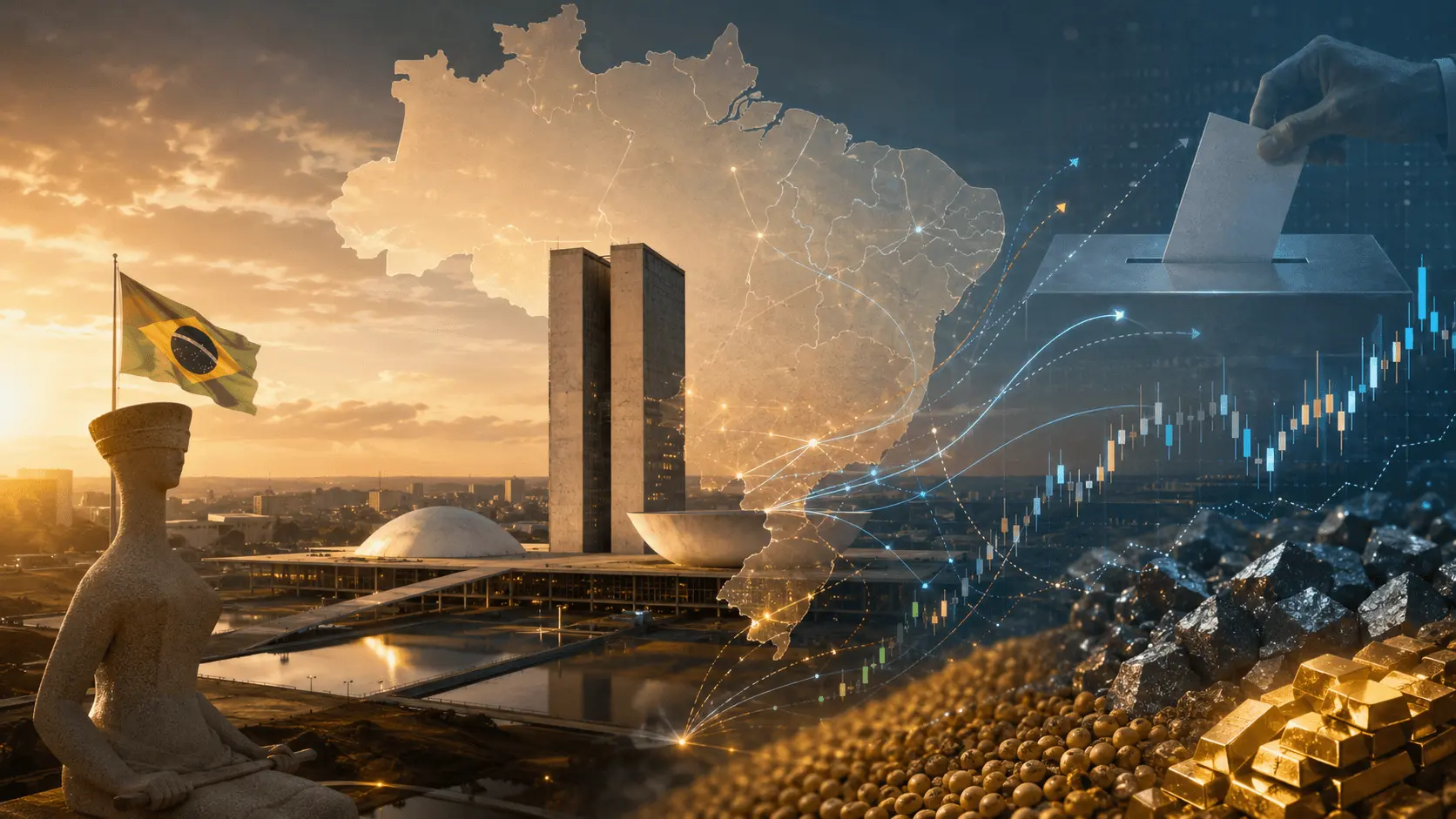
Brazil’s 2026 election is one of the most important political events to watch in Latin America. The result could affect fiscal policy, commodity markets, Amazon policy, relations with the United States and China, and the broader political direction of the region.
For forecasters, the central question is not only who wins the presidency. It is which coalition becomes governable, how Congress aligns with the next president, and whether the election produces policy continuity or a sharp change in direction.
Quick Answer
The Brazil election 2026 could produce three main scenarios: Lula continuity, a right-wing shift led by Flávio Bolsonaro, or a fragmented race shaped by runoff dynamics and congressional bargaining. The outcome may influence fiscal policy, commodities, Amazon regulation, trade relations, and regional political expectations.
Why the Brazil Election Matters in 2026
Brazil is Latin America’s largest economy and one of the world’s most important commodity exporters. Political shifts in Brasília can affect investor confidence, fiscal expectations, agriculture, energy, mining, environmental policy, and trade positioning.
The election also matters geopolitically. Brazil has influence inside BRICS, plays a central role in South American diplomacy, and often balances relationships with the United States, China, Europe, and regional partners. A change in leadership could alter tone, priorities, and negotiating style.
This makes Brazil a natural topic for geopolitical forecasting. For a broader view of global political risk, see our article on geopolitical outcomes prediction markets are watching in 2026.
Current Race: Lula, Flávio Bolsonaro, and Runoff Risk
The race is currently framed around President Luiz Inácio Lula da Silva and Senator Flávio Bolsonaro, the son of former President Jair Bolsonaro. Lula’s potential re-election campaign would represent continuity, while Flávio Bolsonaro’s campaign would represent a right-wing challenge with strong links to the Bolsonaro political brand.
Because Brazil uses a two-round presidential system, first-round polling does not tell the whole story. If no candidate wins a majority of valid votes in the first round, the race moves to a runoff. That makes second-round rejection rates, coalition-building, and voter transfers especially important.
For election-focused forecasting mechanics, see our guide on how prediction markets price political events.
Key Drivers to Watch
Election Drivers
- Economic sentiment — inflation, jobs, wages, household debt, and food prices can shape voter behavior.
- Fiscal credibility — investors will watch spending rules, debt expectations, and budget discipline.
- Bolsonaro brand strength — Flávio Bolsonaro’s support may depend on how strongly voters transfer loyalty from his father.
- Lula’s health and age — continuity scenarios depend on public confidence in Lula’s ability to campaign and govern.
- Congressional alignment — Brazil’s next president will likely need a broad coalition to pass legislation.
- Commodity prices — soybeans, iron ore, oil, and agricultural exports can affect economic mood and market expectations.
- Environmental policy — Amazon protection, land use, and climate diplomacy may influence foreign relations and investment narratives.
Three Brazil Election 2026 Scenarios
Possible Scenarios
- Lula continuity scenario — Lula wins re-election with a broad coalition. Markets may focus on fiscal discipline, cabinet composition, and whether policy remains pragmatic enough to reassure investors.
- Right-wing shift scenario — Flávio Bolsonaro or another right-aligned candidate wins. Markets may reassess privatization, regulation, environmental policy, foreign policy, and relations with Congress.
- Fragmented runoff scenario — the race becomes highly polarized, but neither side builds a stable governing coalition easily. This could increase uncertainty around budget votes, reforms, and policy execution.

How Brazil’s Election Could Affect Markets
Markets may respond to Brazil’s election through several channels: currency expectations, local rates, sovereign risk, equity sentiment, commodity-linked companies, and foreign investor confidence. The reaction will likely depend less on ideology alone and more on perceived governability.
Fiscal policy is likely to be one of the most important variables. If investors expect higher spending without credible offsets, pressure on rates and currency sentiment could increase. If the next government signals budget discipline, market concerns may ease.
Brazil can also influence broader emerging-market expectations. A political shock in a major commodity exporter can affect risk appetite beyond one country. For related macro context, see our Dollar Index forecast 2026 and stock market forecast 2026.
Foreign Policy and Regional Implications
Brazil’s next president could influence regional diplomacy around Venezuela, Argentina, trade integration, climate negotiations, and relations with China and the United States. A Lula continuity scenario may preserve Brazil’s current emphasis on multilateral diplomacy, while a right-wing shift could change priorities and tone.
The election may also influence how international partners view the Amazon, climate policy, and agricultural expansion. These issues matter not only politically, but also for trade negotiations and long-term investment narratives.
Brazil’s election is part of a broader Latin American political cycle: see also Nexory’s analysis of the Colombia election 2026 forecast.
Forecasting Signals to Watch
Forecast Checklist
- Second-round polling — runoff polling is more useful than first-round totals in a polarized field.
- Rejection rates — high rejection can limit a candidate’s ceiling.
- Running mates — vice-presidential choices can signal coalition strategy and investor messaging.
- Congressional alliances — governability depends on parties beyond the presidential race.
- Fiscal signals — campaign promises on spending and taxes may affect market expectations.
- Commodity cycles — strong export prices can support economic sentiment, while weakness can increase pressure.
Follow Political Forecasts
Explore Prediction Markets Around Real-World Events
Nexory gives users a simple way to follow and participate in forecasts around politics, crypto, finance, sports, and global events through structured Yes/No prediction markets.
Explore Predictions on NexoryConclusion
The Brazil election 2026 is best understood as a scenario-based forecast. Lula continuity, a right-wing shift, and a fragmented runoff all carry different implications for markets, regional politics, commodity expectations, and environmental policy. The most important signals will be second-round polling, coalition-building, fiscal credibility, and the composition of Congress after the vote.
Frequently Asked Questions
When is the Brazil election in 2026?
Brazil’s general election is expected in October 2026, with a runoff if no presidential candidate wins a majority in the first round.
Who are the main Brazil election 2026 candidates to watch?
The race is currently centered on President Luiz Inácio Lula da Silva and right-wing challenger Flávio Bolsonaro, although coalition dynamics and other candidates could still affect the field.
How could Brazil’s election affect markets?
The election could affect markets through fiscal expectations, currency sentiment, commodity-linked sectors, environmental policy, trade relations, and investor confidence in governability.
What should forecasters watch most closely?
Forecasters should watch second-round polling, rejection rates, running mates, congressional alliances, fiscal signals, commodity trends, and turnout patterns.