US Midterm Elections 2026: Scenarios for Congress, Policy, and Markets
Last updated: May 2026 · 8 min read
The US midterm elections in 2026 could become one of the most important political forecasting events of the year. Control of Congress can affect fiscal policy, tariffs, regulation, investigations, foreign policy constraints, and the legislative path for the final two years of a presidential term.
For prediction-focused analysis, the important question is not simply which party performs better. The key is what combination of House and Senate outcomes emerges — and how that could shift policy expectations. A small number of competitive races may determine whether Washington moves toward unified control, divided government, or a narrow and unstable majority.
Quick Answer
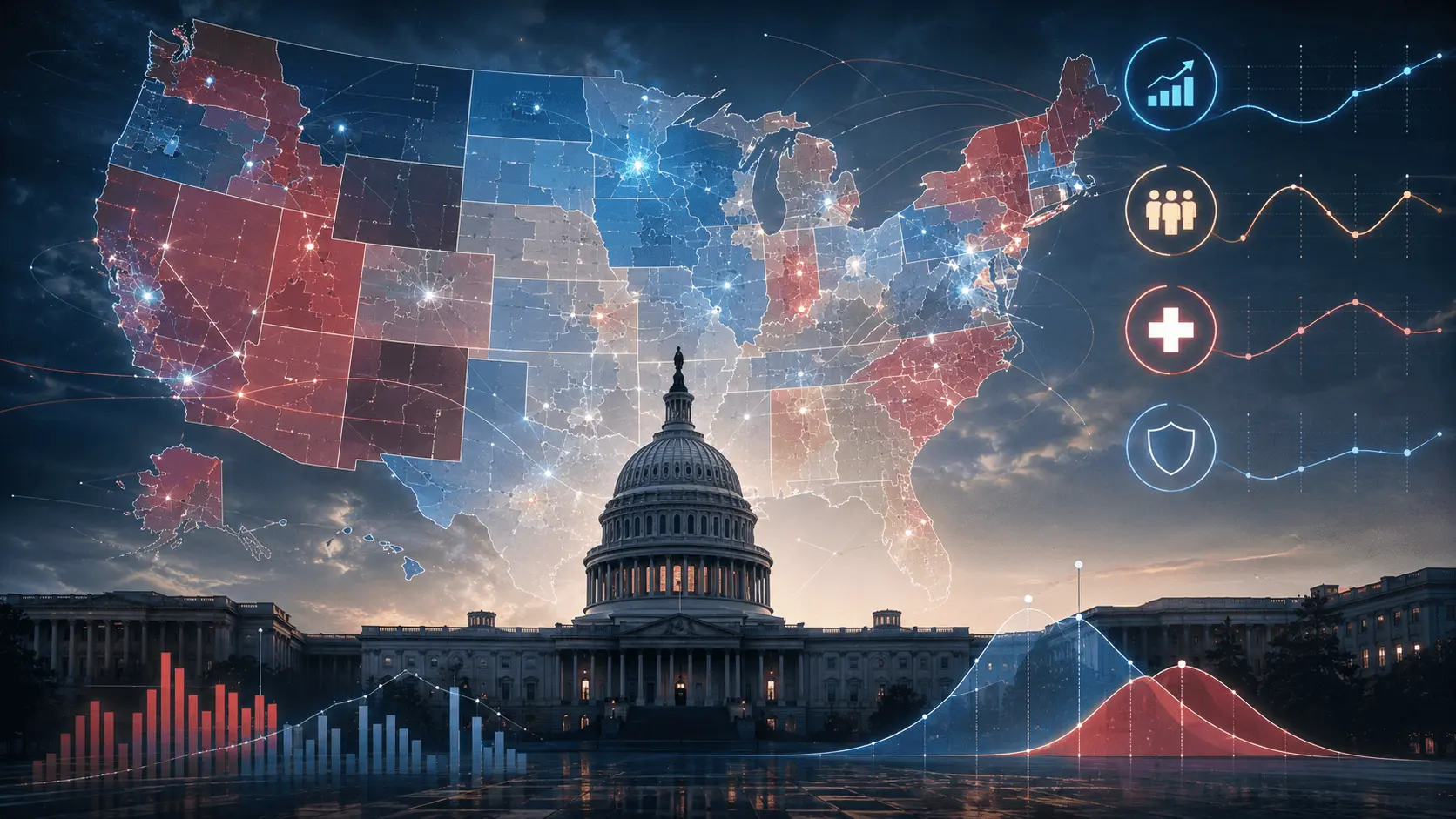
The US midterm elections 2026 could produce three broad scenarios: continued Republican control, divided government, or a Democratic gain in at least one chamber. The outcome may influence fiscal policy, tariffs, regulation, investigations, foreign policy oversight, and market expectations.
Why the 2026 Midterms Matter
Midterm elections often function as a referendum on the governing party, but the 2026 cycle may be especially important because congressional margins are narrow and policy uncertainty is high. The outcome could affect spending negotiations, trade policy, immigration, energy regulation, technology rules, and the pace of investigations.
Markets usually do not react to elections only because of party labels. They react to expected policy paths. A Congress that supports the president’s agenda may create one set of expectations, while divided government may create another. Gridlock can reduce some policy risks but increase others, especially around budgets and debt negotiations.
For a broader explanation of election forecasting mechanics, see our article on how prediction markets price political events.
Key Factors That Could Shape the Election
Election Drivers
- Cost of living — inflation, wages, food prices, housing, and energy costs can shape voter sentiment.
- Presidential approval — midterms often reflect public satisfaction or frustration with the administration.
- Redistricting — congressional maps can alter the number and location of competitive seats.
- Turnout — midterm electorates are usually smaller and can differ from presidential-year electorates.
- Candidate quality — Senate and House races can be influenced by local campaigns and candidate-specific issues.
- Policy salience — immigration, healthcare, tariffs, democracy, crime, and foreign policy may matter differently across states and districts.
Three Congressional Control Scenarios
Possible Scenarios
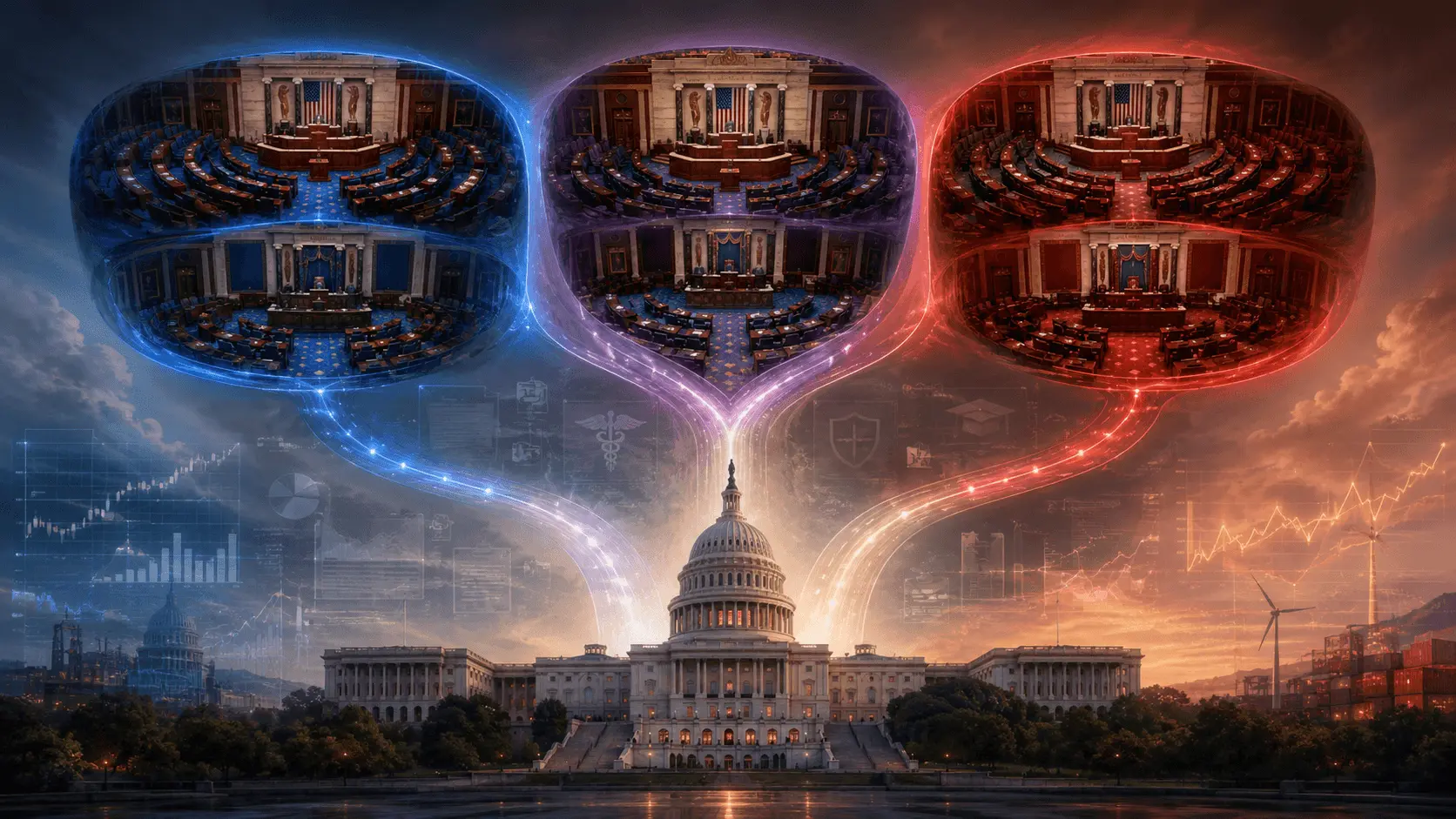
- Republicans retain Congress — this could support continuity for the administration’s legislative priorities, although narrow margins may still limit what can pass.
- Democrats take the House while Republicans hold the Senate — this would likely increase oversight, investigations, and budget confrontation while leaving nominations and Senate procedure under Republican influence.
- Democrats gain broader congressional control — this would create a stronger check on the administration and could reshape expectations around investigations, spending, tariffs, regulation, and legislative bargaining.
How Redistricting Changes the Forecast
Redistricting is one of the most important structural variables in House forecasting. When congressional maps change, the battlefield changes too. A party may gain or lose competitive opportunities before a single vote is cast.
This means national polling is useful but incomplete. A party can improve nationally and still face a difficult map. Another party can underperform nationally but protect control through district design, incumbency, and favorable geographic distribution.
For prediction markets, redistricting matters because it changes the underlying resolution environment. Forecasts need to account for both public sentiment and the structure of the seats being contested.
Market Implications of the 2026 Midterms
The midterms could affect markets through policy expectations rather than immediate economic data. Investors may adjust expectations for tariffs, corporate regulation, fiscal policy, defense spending, energy policy, and the probability of legislative gridlock.
Trade policy is one area to watch. If tariffs remain central to the political agenda, congressional control could influence whether markets expect escalation, modification, or stronger oversight. For related context, see our article on Trump tariffs and market impact in 2026.
Equity markets may also respond to changes in fiscal and regulatory expectations. For broader market scenarios, see the stock market forecast for 2026.
What Prediction Markets Should Track
Forecast Checklist
- Generic ballot trend — useful for national mood, but not enough on its own.
- Competitive House districts — House control may turn on a small number of seats.
- Senate battlegrounds — state-level dynamics matter more than national mood in Senate races.
- Cost-of-living sentiment — economic perception can influence turnout and swing voters.
- Redistricting changes — map changes can shift probabilities before campaign events do.
- Candidate nominations — weak or strong candidates can move individual races significantly.
The 2026 midterms also belong within the broader geopolitics cluster because US congressional control can shape foreign policy oversight, sanctions, trade, military aid, and regulatory priorities. For a wider view, see our geopolitical pillar on geopolitical outcomes prediction markets are watching in 2026.
Follow Political Forecasts
Explore Prediction Markets Around Real-World Events
Nexory gives users a simple way to follow and participate in forecasts around politics, crypto, finance, sports, and global events through structured Yes/No prediction markets.
Explore Predictions on NexoryConclusion
The US midterm elections 2026 are not a single forecast. They are a set of connected outcomes: House control, Senate control, competitive states, redistricting effects, voter priorities, and policy implications. The most useful approach is to track scenarios rather than assume one national trend will explain every race.
The midterms also shape US foreign and trade policy, making this election closely connected to US-China tensions in 2026.
Frequently Asked Questions
When are the US midterm elections in 2026?
The US midterm elections are scheduled for November 3, 2026. They include all 435 House seats and a portion of the Senate.
Why do the 2026 midterms matter for markets?
The midterms can affect expectations for tariffs, fiscal policy, regulation, investigations, energy policy, and legislative gridlock. Markets react to likely policy paths, not only election results.
What are the main 2026 midterm scenarios?
The main scenarios are continued Republican control, divided government, or Democratic gains in one or both chambers. Each scenario could create different policy expectations.
What should election forecasters watch?
Forecasters should watch generic ballot trends, competitive districts, Senate battlegrounds, redistricting, turnout signals, voter priorities, and candidate quality.