US-China Trade and Technology Tensions 2026: What Could Happen Beyond Taiwan?
Last updated: May 2026 · 8 min read
US-China tensions in 2026 are not limited to Taiwan risk. The broader conflict now includes tariffs, export controls, artificial intelligence, advanced chips, rare earths, supply chains, industrial policy, and the strategic question of technological self-reliance.
For forecasters, this makes the US-China relationship one of the most important global uncertainty channels. A diplomatic easing could reduce market stress, while renewed escalation could affect technology companies, defence supply chains, electric vehicles, semiconductors, AI infrastructure, and commodity-linked sectors.
Quick Answer
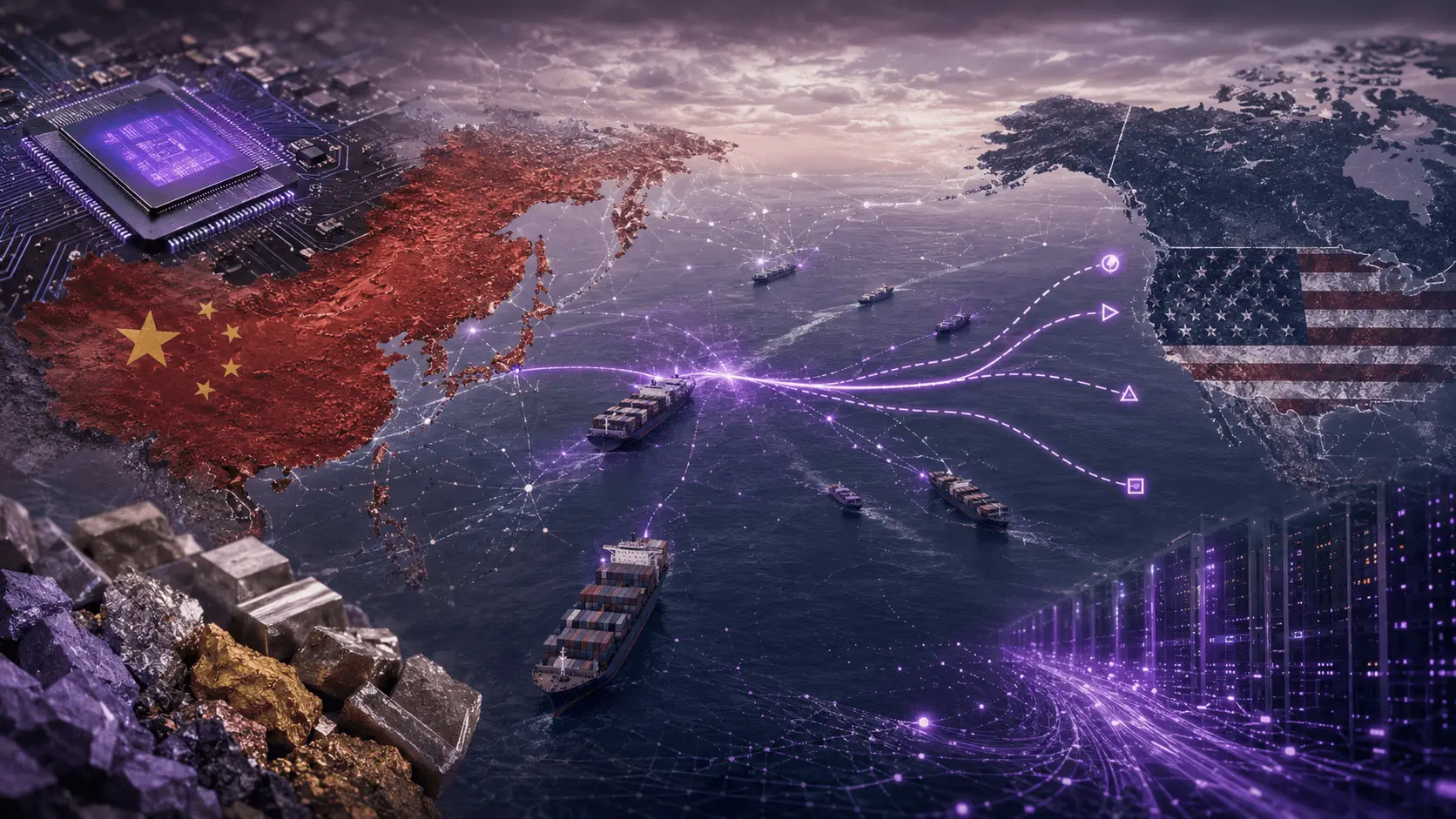
US-China tensions in 2026 could follow three broad paths: managed competition, renewed tariff and export-control escalation, or selective cooperation on supply-chain risks. The most important issues to watch are semiconductors, AI chips, rare earths, tariffs, Taiwan-linked risk, and whether both sides can separate economic competition from broader security conflict.
Why US-China Tensions Matter Beyond Taiwan
Taiwan remains one of the most sensitive geopolitical issues in the US-China relationship, but it is not the only driver of uncertainty. Trade rules, chip controls, AI capacity, rare earth minerals, military supply chains, and industrial policy can all create market-moving events even without a direct military crisis.
This broader competition matters because modern economies rely on complex technology supply chains. A restriction on advanced chips can affect AI companies. A rare earth control can affect defence hardware and electric vehicles. A tariff escalation can affect inflation, corporate margins, and consumer prices.
For the Taiwan-specific angle, see our separate article on China and Taiwan risk in prediction markets. This article focuses on the wider trade and technology competition.
Key Drivers of US-China Tension in 2026
Main Drivers
- Tariffs — tariff policy can affect goods prices, trade volumes, corporate margins, and inflation expectations.
- Semiconductor controls — advanced chip restrictions shape AI infrastructure, cloud computing, and defence technology.
- Rare earth export controls — critical minerals can become leverage in aerospace, defence, EVs, energy, and electronics supply chains.
- AI competition — both countries want leadership in models, chips, data centers, applications, and industrial AI deployment.
- Supply-chain relocation — companies may shift production toward Southeast Asia, India, Mexico, or domestic facilities.
- Taiwan-linked uncertainty — even non-military tension around Taiwan can affect chip supply expectations and investor sentiment.
- Domestic politics — election cycles, industrial policy, and national security arguments can make compromise harder.
Three US-China Tension Scenarios
Possible Scenarios
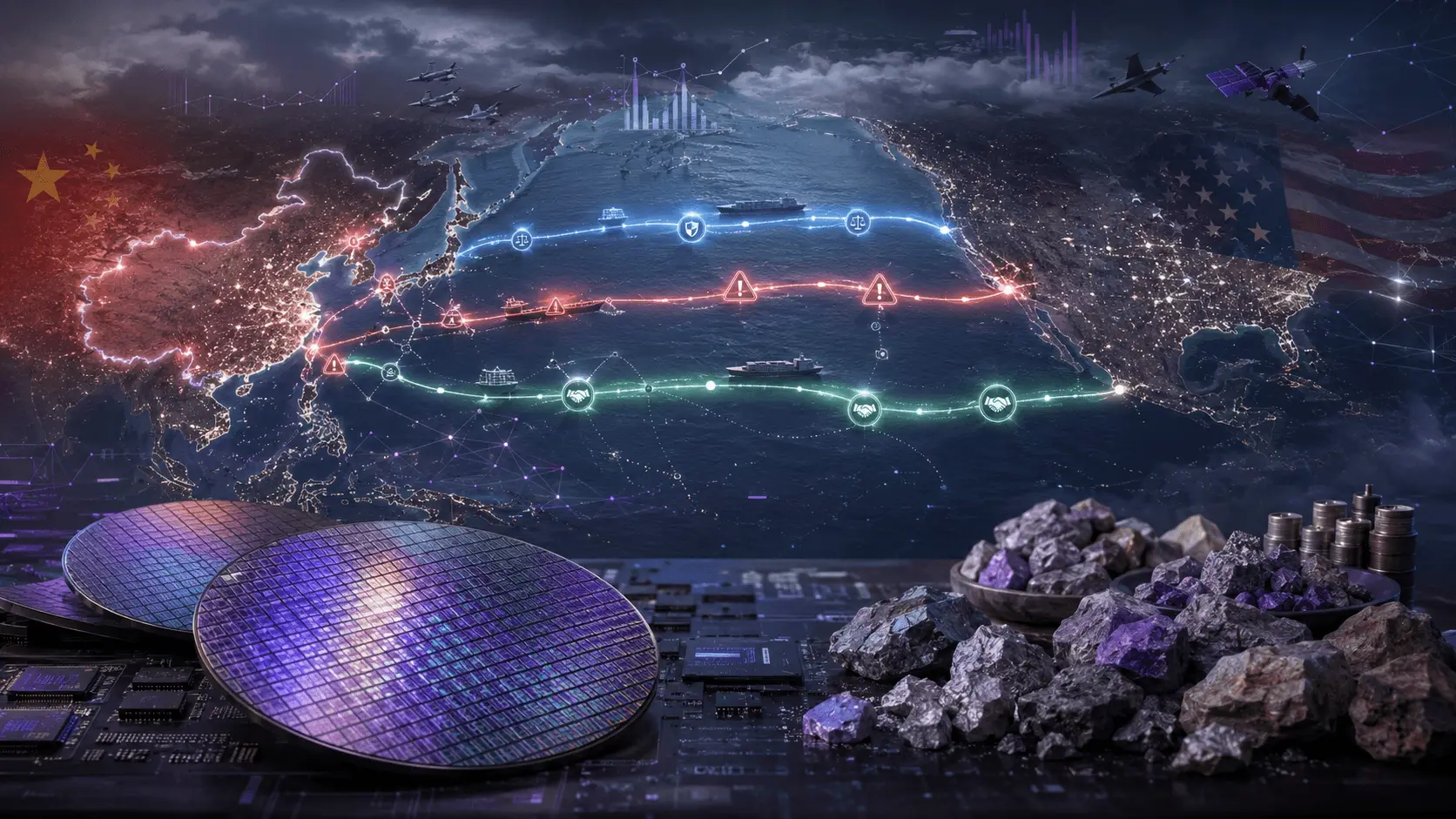
- Managed competition scenario — both sides keep tariffs, export controls, and strategic restrictions in place, but avoid major escalation. Markets adjust to a stable but tense relationship.
- Renewed escalation scenario — tariffs widen, chip controls tighten, China expands rare earth restrictions, and companies accelerate supply-chain diversification.
- Selective cooperation scenario — the US and China maintain strategic rivalry but cooperate in limited areas such as critical mineral licensing, fentanyl precursors, climate, or trade stabilization.
Semiconductors and AI: The Core Technology Battleground
Semiconductors sit at the center of the US-China technology conflict. Advanced chips are essential for AI models, data centers, defence systems, autonomous systems, and high-performance computing. That makes chip access a strategic issue rather than a normal trade question.
US export controls aim to limit China’s access to the most advanced chips and chipmaking tools. China’s response has been to accelerate domestic alternatives, support national champions, and reduce dependence on foreign technology where possible.
This does not mean China can immediately replace every restricted technology. It means the long-term race may become more expensive, more fragmented, and more politically driven. For a related technology-policy angle, see our article on AI regulation in 2026.
Rare Earths and Critical Minerals
Rare earths and critical minerals are another major pressure point. These materials are used in defence systems, wind turbines, electric vehicles, electronics, industrial magnets, and aerospace applications. Restrictions can create supply-chain stress even when they do not affect consumer goods immediately.
China’s rare earth controls have highlighted the vulnerability of global supply chains. Even partial easing or case-by-case licensing may leave companies uncertain, because supply depends not only on law but on approvals, timing, trust, and political conditions.
For forecasters, rare earths are important because they create a non-military pressure channel. A dispute can affect defence readiness, clean energy supply chains, electronics manufacturing, and investor expectations without a direct conflict.
How Tariffs Could Affect Markets
Tariffs can affect markets through multiple channels. They can raise import costs, pressure corporate margins, shift supply chains, create retaliation risk, and influence inflation expectations. They can also produce uncertainty when companies do not know whether current rates are temporary or structural.
The most important question is not only whether tariffs are high. It is whether firms believe they will remain in place long enough to justify relocation, supplier changes, and long-term capital investment. If companies assume the dispute is permanent, supply chains may continue to fragment.
For a deeper tariff-specific view, read our article on Trump tariffs and market impact in 2026.
Market Sectors Most Exposed
Exposed Areas
- Semiconductors — chipmakers and equipment suppliers are directly affected by export controls and licensing rules.
- AI infrastructure — data centers, cloud providers, and AI hardware supply chains depend on chip availability.
- Electric vehicles — EV supply chains rely on batteries, magnets, minerals, and electronics.
- Defence and aerospace — rare earths and advanced electronics are critical for military and aviation systems.
- Consumer electronics — tariffs and supply-chain shifts can affect costs and production planning.
- Industrial manufacturing — machinery, sensors, robotics, and automation depend on cross-border technology inputs.
Forecasting Signals to Watch
Forecast Checklist
- Export-control updates — new chip, AI, or equipment restrictions can change the technology outlook quickly.
- Rare earth licensing — approvals, delays, or exemptions may reveal whether tensions are easing or tightening.
- Tariff negotiations — partial deals can reduce stress, while failed talks can restart escalation.
- Huawei and domestic chip progress — Chinese technology advances can shift assumptions about sanctions effectiveness.
- Taiwan headlines — even non-military Taiwan tension can affect semiconductor risk pricing.
- Supply-chain relocation — corporate investment decisions show whether firms expect long-term fragmentation.
- AI policy decisions — rules on AI models, compute, chips, and data centers may become a central part of strategic competition.
The US-China relationship also matters for broader market expectations. If trade and technology conflict intensifies, it may affect inflation, corporate margins, global equities, and risk appetite. For macro-market context, see our stock market forecast for 2026.
Follow Global Forecasts
Explore Prediction Markets Around Real-World Events
Nexory gives users a simple way to follow and participate in forecasts around geopolitics, crypto, finance, sports, and technology through structured Yes/No prediction markets.
Explore Predictions on NexoryConclusion
US-China tensions in 2026 should be analyzed beyond Taiwan alone. The most important forecast drivers include tariffs, advanced chips, AI infrastructure, rare earths, export controls, supply-chain relocation, and selective diplomatic cooperation. The relationship may remain tense even when both sides cooperate on specific issues, which makes scenario-based forecasting more useful than a single directional prediction.
US-China tensions also shape defence policy priorities in the West. See how European defense spending is changing in 2026, and how the US midterms 2026 could shift US foreign policy.
Frequently Asked Questions
What are the main US-China tensions in 2026?
The main tensions include tariffs, semiconductor export controls, AI competition, rare earth restrictions, Taiwan-linked risk, supply-chain relocation, and industrial policy rivalry.
Why do rare earths matter in US-China relations?
Rare earths matter because they are used in defence systems, electric vehicles, electronics, wind turbines, aerospace, and industrial magnets. Export restrictions can create supply-chain stress.
How could US-China tensions affect markets?
US-China tensions could affect markets through tariffs, inflation expectations, semiconductor restrictions, corporate margins, technology valuations, supply-chain costs, and risk sentiment.
What should forecasters watch next?
Forecasters should watch export-control changes, rare earth licensing, tariff negotiations, chip technology progress, Taiwan-related headlines, AI policy, and supply-chain relocation decisions.