AI Data Center Water Use 2026: Cooling, Local Risk, and Infrastructure Scenarios
Last updated: May 2026 · 8 min read
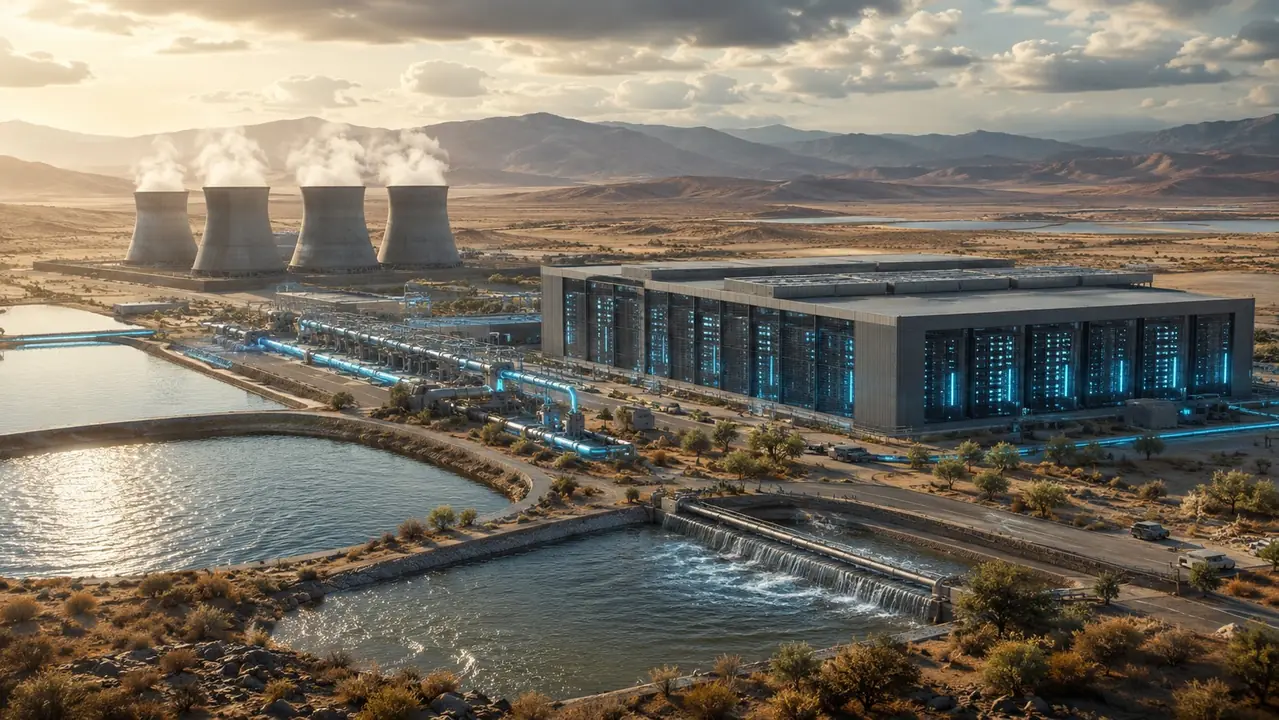
AI data center water use is becoming an important part of the infrastructure debate. Large AI campuses generate heat, and cooling that heat can require significant water depending on the facility design, local climate, and electricity source.
In 2026, the water issue is likely to become more visible because AI data centers are expanding into regions where local communities already worry about drought, heat, water access, and public infrastructure. The question is not whether every data center creates the same water risk. The question is where water becomes a binding constraint.
Quick Answer
AI data center water use could become a major local risk in 2026, especially in hot or water-stressed regions. Facilities may reduce direct water use through dry cooling, liquid cooling, reuse systems, and better siting, but these choices can increase power demand or costs. The main forecast is whether communities demand stricter water reporting and capacity rules before approving new projects.
Why Data Centers Use Water
Data centers use water mainly for cooling. Servers, GPUs, memory, and networking systems generate heat while processing AI workloads. Cooling systems remove that heat so hardware can operate reliably and efficiently.
Water can be used directly in evaporative cooling systems. It can also be used indirectly through electricity generation, because power plants may consume water for cooling or steam processes. This means the water footprint of AI infrastructure is not limited to the data center building itself.
This issue connects to both AI data center energy demand and AI data center regulation in 2026. Water can become a permitting issue when communities believe local resources are being stretched.
Main Water Risk Drivers
- Cooling design — evaporative systems can use more water, while dry cooling can use more electricity.
- Local climate — hot regions may require more intensive cooling, especially during summer peaks.
- Water availability — drought-prone areas face higher community and regulatory risk.
- Power source — electricity generation can add indirect water consumption.
- Transparency — limited disclosure can increase public concern and political pressure.
Cooling Trade-Offs: Water, Power, and Cost
Water use cannot be analyzed separately from electricity use. Some cooling systems reduce water consumption but require more power. Others save electricity but use more water. The best design depends on local climate, grid conditions, water stress, and operating cost.
This creates a forecasting trade-off. If regulators push data centers toward low-water cooling, electricity demand may rise during hot periods. If operators rely more heavily on water-based cooling, local water systems may face pressure.
The strongest data center projects may be those that optimize both sides: lower water use, efficient power consumption, heat reuse where possible, and transparent reporting to communities.
Three Scenarios for AI Data Center Water Use in 2026
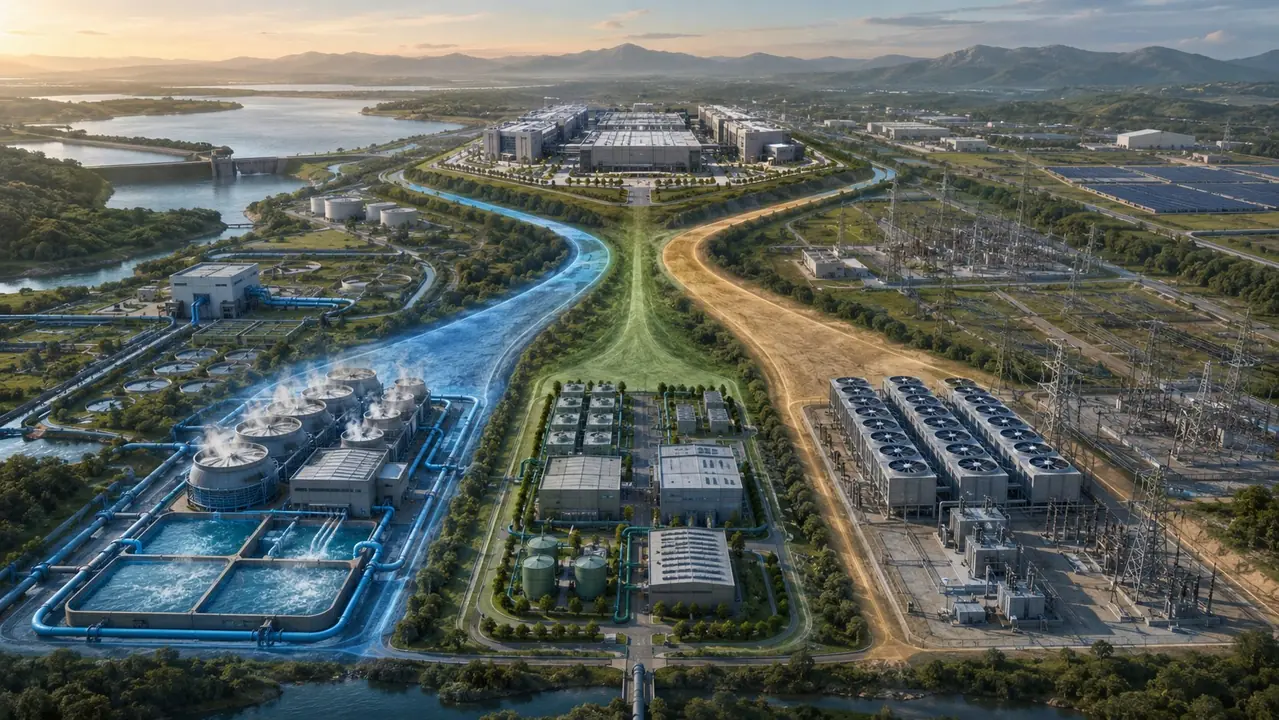
Possible Scenarios
- Transparent growth scenario — data centers disclose water use, invest in efficient cooling, and reduce community resistance.
- Water stress scenario — projects in hot or dry regions face stronger opposition, stricter permitting, or redesign requirements.
- Cooling innovation scenario — liquid cooling, reuse systems, dry cooling, and better siting reduce water risk but may increase power planning complexity.
1. Transparent Growth Scenario
In this scenario, data center operators reduce conflict by making water use easier to understand. They report expected withdrawals, peak demand, cooling design, reuse plans, and community safeguards before projects are approved.
Transparency does not eliminate water use, but it can reduce uncertainty. Communities may be more willing to approve projects when they understand how the facility affects public water systems.
2. Water Stress Scenario
In the water stress scenario, data center projects face resistance in dry or heat-exposed regions. Local residents, environmental groups, and regulators may question whether large cooling loads are appropriate when water supply is already under pressure.
This could lead to delayed approvals, stricter environmental review, required redesigns, or relocation toward cooler and water-secure regions.
3. Cooling Innovation Scenario
In the cooling innovation scenario, operators adopt technologies and designs that reduce water intensity. This may include liquid cooling, closed-loop systems, recycled water, heat reuse, optimized workload scheduling, or dry cooling in sensitive regions.
The trade-off is that some low-water cooling choices can require more electricity. That means water planning and power planning need to be coordinated rather than treated as separate issues.
What Communities and Regulators May Ask For
Policy Watchlist
- Water disclosure — expected annual and peak water use before project approval.
- Cooling standards — requirements for efficient or low-water cooling in stressed regions.
- Recycled water use — incentives or obligations to use non-potable water where possible.
- Community safeguards — commitments that public water capacity will not be reduced during peak periods.
- Coordinated planning — joint review of water, power, land, and environmental impacts.
Why Water Use Matters for AI Forecasts
Water use matters because it can affect where AI infrastructure is built. A project that is technically feasible and financially attractive may still face delays if it creates local water concerns.
This could shift data center growth toward cooler climates, regions with stronger water systems, areas with recycled water infrastructure, or sites where operators can use low-water cooling designs.
Water risk also links to the AI capex bubble debate. If projects need expensive redesigns or face approval delays, infrastructure spending may become more selective.
Follow Infrastructure Forecasts
Explore Real-World Forecasts on Nexory
Nexory lets users follow forecasts across technology, finance, crypto, politics, sports, and global events as expectations evolve.
Explore PredictionsConclusion: Water Could Become a Local AI Constraint
AI data center water use in 2026 is best understood as a local infrastructure risk. The global AI trend may be strong, but projects can still face resistance if communities believe water capacity is being stretched.
The most important signals are water-use disclosure, cooling technology, local climate, public water capacity, and regulation. In the next phase of AI infrastructure, water may become as important to project approval as chips, power, and financing.
Frequently Asked Questions
Why do AI data centers use water?
AI data centers may use water for cooling high-density servers and indirectly through electricity generation. The exact water footprint depends on cooling design, climate, and power source.
Can data centers reduce water use?
Yes. Operators can reduce water use through dry cooling, liquid cooling, closed-loop systems, recycled water, heat reuse, and better location choices. Some options may increase electricity demand.
Why is water use a regulation issue?
Water use becomes a regulation issue when communities worry that data centers could reduce public water capacity, worsen drought stress, or require infrastructure upgrades paid by local users.
What should forecasters watch?
Key signals include water-use reporting, cooling design, local drought conditions, public water capacity, permitting decisions, community opposition, and requirements for recycled or non-potable water.