Nuclear Power and AI Data Centers: Why Energy Deals Matter in 2026
Last updated: May 2026 · 8 min read
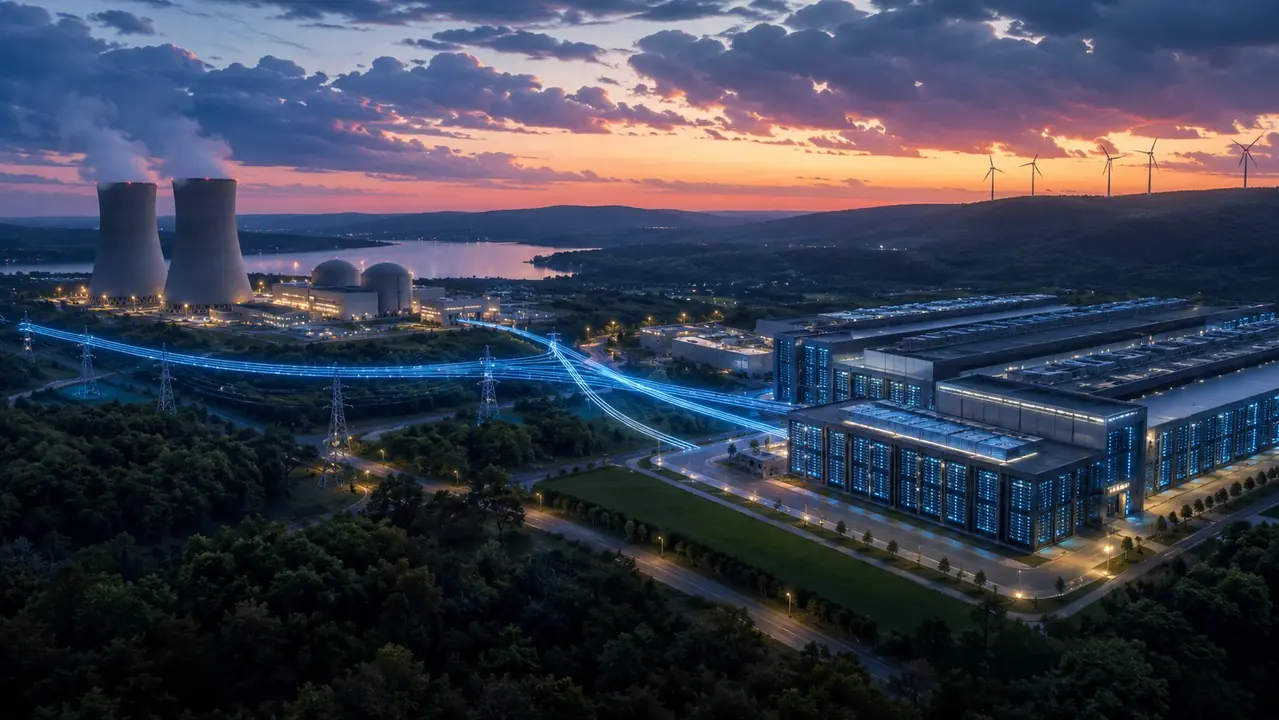
Nuclear power has become one of the most important energy topics in the AI infrastructure debate. As data centers expand to support artificial intelligence, large technology companies are looking for electricity sources that are reliable, scalable, and low-carbon.
The core question is not whether nuclear power will solve every AI energy problem. The better forecasting question is how much nuclear energy can realistically support AI data centers, how quickly projects can come online, and what risks could slow the strategy.
Quick Answer
Nuclear power could become a major support layer for AI data centers, but it is unlikely to be a quick fix in 2026. Existing reactor deals may help secure firm low-carbon electricity, while advanced nuclear projects could matter later in the decade. The main risks are permitting, construction delays, cost overruns, grid integration, and public acceptance.
Why AI Companies Are Looking at Nuclear Power
AI data centers need power that is available around the clock. Renewable energy can play a major role, but solar and wind output varies by time, weather, and location. Battery storage helps, but large AI campuses may require a deeper mix of generation sources.
Nuclear power is attractive because it can provide firm electricity with low operational carbon emissions. For data center operators trying to balance AI growth with sustainability targets, this makes nuclear power strategically important.
This article builds on our broader analysis of AI data center energy demand in 2026. Nuclear power is one possible answer to that demand, but it comes with its own timeline and risk profile.
Why Nuclear Matters for AI
- Firm power — nuclear plants can produce electricity continuously, which fits constant data center demand.
- Low-carbon supply — nuclear can support clean energy targets when paired with grid planning.
- Large-scale output — existing reactors can provide hundreds of megawatts or more.
- Strategic contracts — long-term power agreements can give data center operators more energy certainty.
- Policy relevance — nuclear projects depend heavily on regulatory approval and public acceptance.
Existing Reactors vs Advanced Nuclear
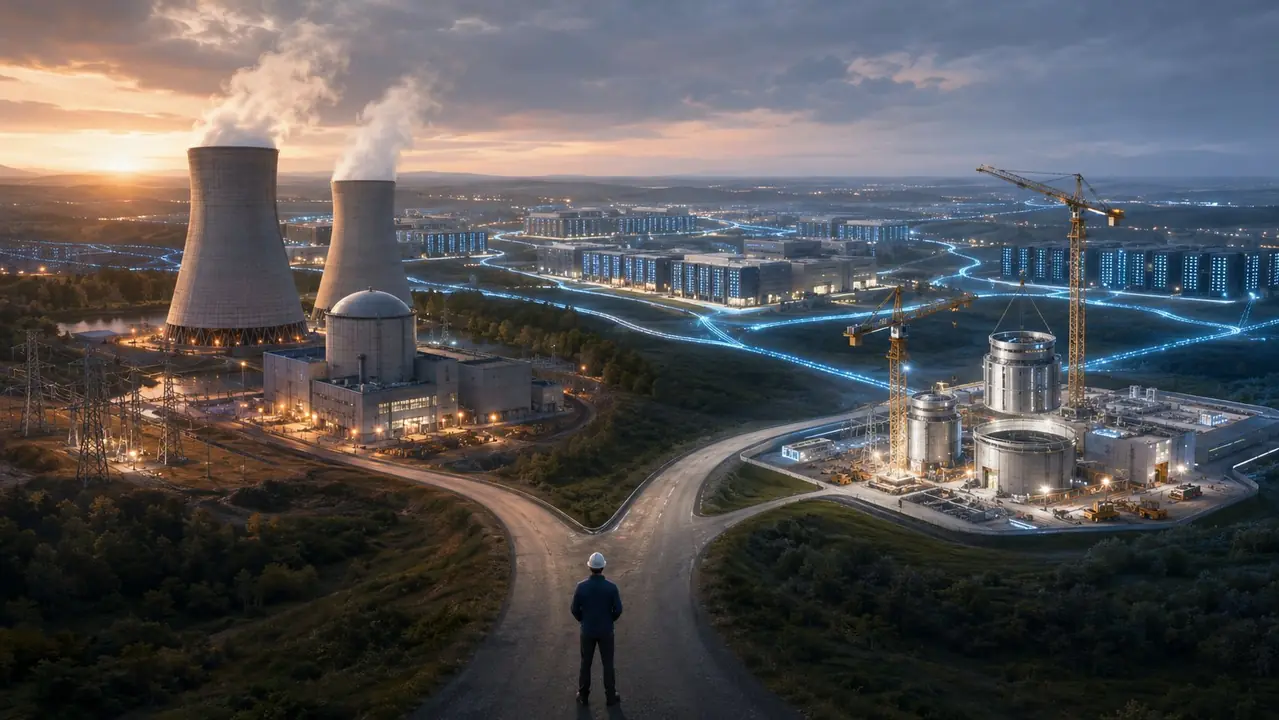
There are two different nuclear stories in the AI infrastructure market. The first is the use or restart of existing nuclear plants. These projects may be closer to commercial reality because the sites, grid connections, and operating history already exist.
The second story is advanced nuclear, including small modular reactors and next-generation designs. These could become important over time, but many projects still face construction, certification, financing, and fuel-supply questions.
For 2026, the most realistic impact is likely to come from contracts, restarts, site selection, permitting progress, and market expectations — not from a sudden wave of new advanced reactors already producing power.
Three Scenarios for Nuclear Power and AI Data Centers
Possible Scenarios
- Existing reactor revival — technology companies support restarts, extensions, or power contracts linked to existing nuclear assets.
- Advanced nuclear acceleration — small modular reactor projects gain regulatory and commercial momentum, but mostly affect later-decade capacity.
- Delayed nuclear buildout — cost, permitting, supply chains, or local opposition slow nuclear’s contribution to AI energy demand.
1. Existing Reactor Revival
In this scenario, nuclear power supports AI data centers mainly through existing facilities. Companies may sign long-term power agreements, help keep plants operating, or support the restart of retired reactors where technically and legally possible.
This path may be faster than building new reactors from scratch, but it still requires regulatory approval, plant upgrades, grid coordination, and public trust.
2. Advanced Nuclear Acceleration
In this scenario, advanced reactors become a credible long-term solution for AI infrastructure. Small modular designs could eventually be matched with data center campuses or regional grids that serve large digital loads.
The important caveat is timing. Even if advanced nuclear gains momentum in 2026, most projects are more likely to shape energy supply toward 2030 and beyond than immediately change the power balance this year.
3. Delayed Nuclear Buildout
In a slower scenario, nuclear plans face delays. These could come from construction costs, supply chain constraints, regulatory review, fuel availability, legal challenges, or local opposition.
If that happens, AI data center operators may rely more heavily on gas, renewables, batteries, grid imports, demand-response systems, or new locations with easier power access.
Key Risks to Watch
Nuclear power can provide firm electricity, but nuclear projects are complex. Forecasts should avoid assuming that every announced deal will produce power on schedule.
Risk Checklist
- Regulatory approval — reactor restarts and new designs require safety and environmental review.
- Construction timeline — nuclear projects often face long lead times and schedule risk.
- Cost control — financing becomes harder if budgets rise or interest rates remain elevated.
- Grid integration — power must be delivered where data center demand is located.
- Public acceptance — local support can affect project timelines and political risk.
What This Means for AI Infrastructure Forecasts
Nuclear power could strengthen the long-term AI infrastructure story by providing firm electricity for large compute loads. It may also support utilities, nuclear operators, engineering firms, fuel suppliers, and grid equipment providers.
However, the market should separate signed agreements from delivered electricity. The strongest signal in 2026 may be not reactor output itself, but whether nuclear-linked AI projects keep meeting regulatory, financing, and construction milestones.
For a broader market view, this topic also connects to stock market scenarios for 2026 and future AI infrastructure investment trends.
Follow Energy and Technology Forecasts
Explore Real-World Forecasts on Nexory
Nexory lets users follow forecasts around technology, finance, crypto, politics, sports, and global events as expectations evolve.
Explore PredictionsConclusion: Nuclear Is Strategic, but Timing Matters
Nuclear power is becoming strategically important for AI data centers because it can provide firm, low-carbon electricity. But the timeline matters. Existing reactor deals may be more relevant in the near term, while advanced nuclear projects are more likely to influence the late 2020s and 2030s.
The key forecast for 2026 is whether nuclear-linked AI energy projects move from announcements into credible execution. Permits, financing, construction progress, and grid planning will matter more than headlines alone.
Frequently Asked Questions
Why are AI data centers interested in nuclear power?
AI data centers need large amounts of reliable electricity. Nuclear power can provide firm low-carbon supply, which makes it attractive for companies trying to scale AI infrastructure while managing sustainability targets.
Can nuclear power solve AI energy demand in 2026?
Not on its own. Nuclear power can support AI infrastructure, but projects face long timelines, regulatory review, construction risk, and grid integration challenges.
Are small modular reactors ready for AI data centers?
Small modular reactors could become relevant later in the decade, but many projects still need regulatory approvals, construction progress, commercial validation, and fuel supply planning.
What should forecasters watch?
Key signals include reactor restart approvals, advanced nuclear permits, power purchase agreements, construction milestones, grid connection progress, and local political support.