AI Data Centers and Electricity Prices: Could Power Costs Rise in 2026?
Last updated: May 2026 · 8 min read
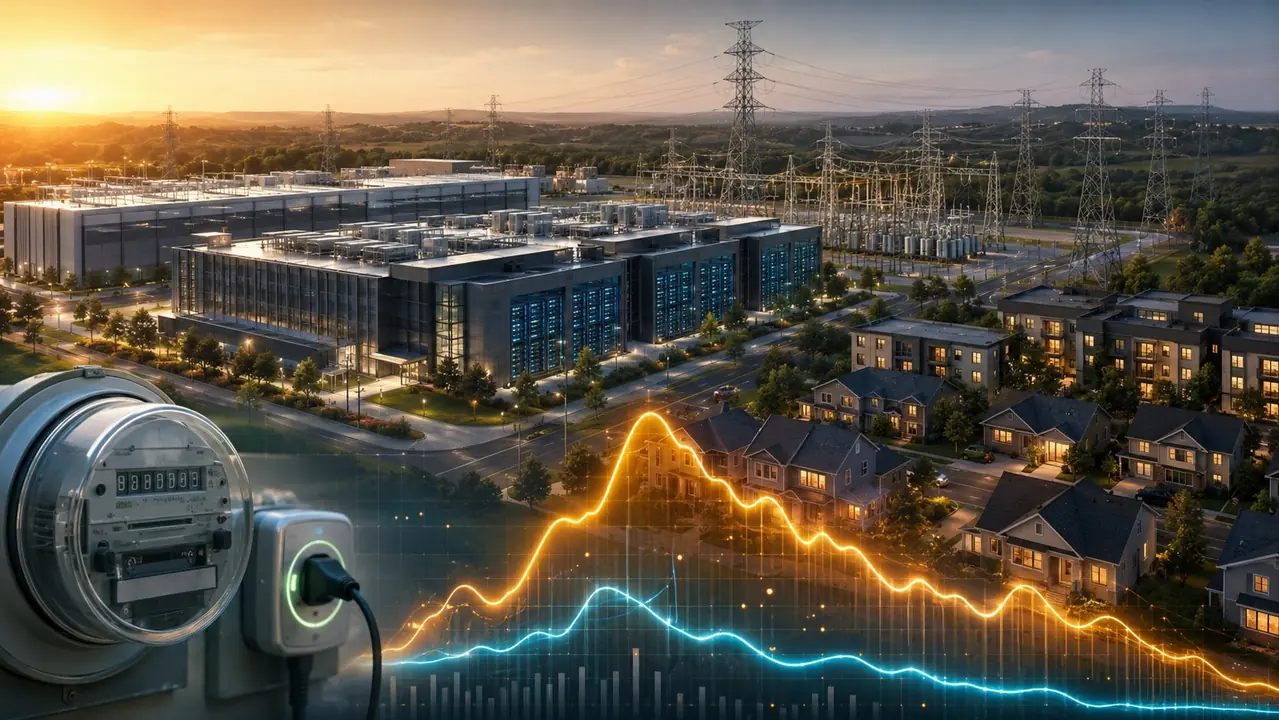
AI data centers are becoming a major source of electricity demand. As companies build larger AI infrastructure, the question is no longer only whether the grid can supply enough power. A second question is becoming more important for households, businesses, and policymakers: could AI data centers push electricity prices higher?
The answer depends heavily on location. In regions with available power, flexible demand, and enough transmission capacity, the price impact may be limited. In regions where data center growth is concentrated and the grid is already tight, the risk of higher costs may be more significant.
Quick Answer
AI data centers could contribute to higher electricity prices in some regions, but the effect is unlikely to be uniform. Prices may rise where data center demand grows faster than generation, transmission, and grid upgrades. The impact could be smaller where utilities allocate costs clearly, add supply efficiently, and use flexible load management.
Why AI Data Centers Can Affect Electricity Prices
Electricity prices are affected by demand, supply, fuel costs, transmission constraints, grid investment, and regulatory decisions. AI data centers can influence several of these at once because they consume large amounts of power and often require new infrastructure.
If a new data center requires upgrades to power lines, substations, transformers, backup systems, or generation capacity, someone must pay for those investments. The key policy question is whether costs are paid mostly by the data center operator, spread across all utility customers, or shared through a mixed structure.
This makes AI electricity demand a macroeconomic issue as well as a technology issue. For the broader energy-demand background, see our article on AI data center energy demand in 2026.
Main Price Channels
- Higher demand — large AI campuses can increase total electricity consumption in concentrated regions.
- Grid investment — utilities may need new transmission lines, substations, and transformers.
- Peak load pressure — inflexible demand during high-use periods can raise system costs.
- Fuel mix — if new demand is met by gas or coal, prices may become more sensitive to fuel costs.
- Cost allocation — regulation determines whether infrastructure costs are paid by data centers or wider customer groups.
The Regional Split: Why Some Areas Face More Risk
AI data center price risk is not evenly distributed. Some regions have abundant generation, available land, flexible regulatory systems, and faster grid expansion. Others have high demand concentration, limited transmission capacity, local opposition, or slower permitting.
This means the most important forecasts are regional. A national or global average can hide local stress. A data center cluster can matter much more to a local power system than to the global electricity market.
Electricity price effects may therefore appear first in places where AI infrastructure is concentrated. These are the regions where utilities, regulators, and residents are most likely to debate who should pay for new capacity and grid upgrades.
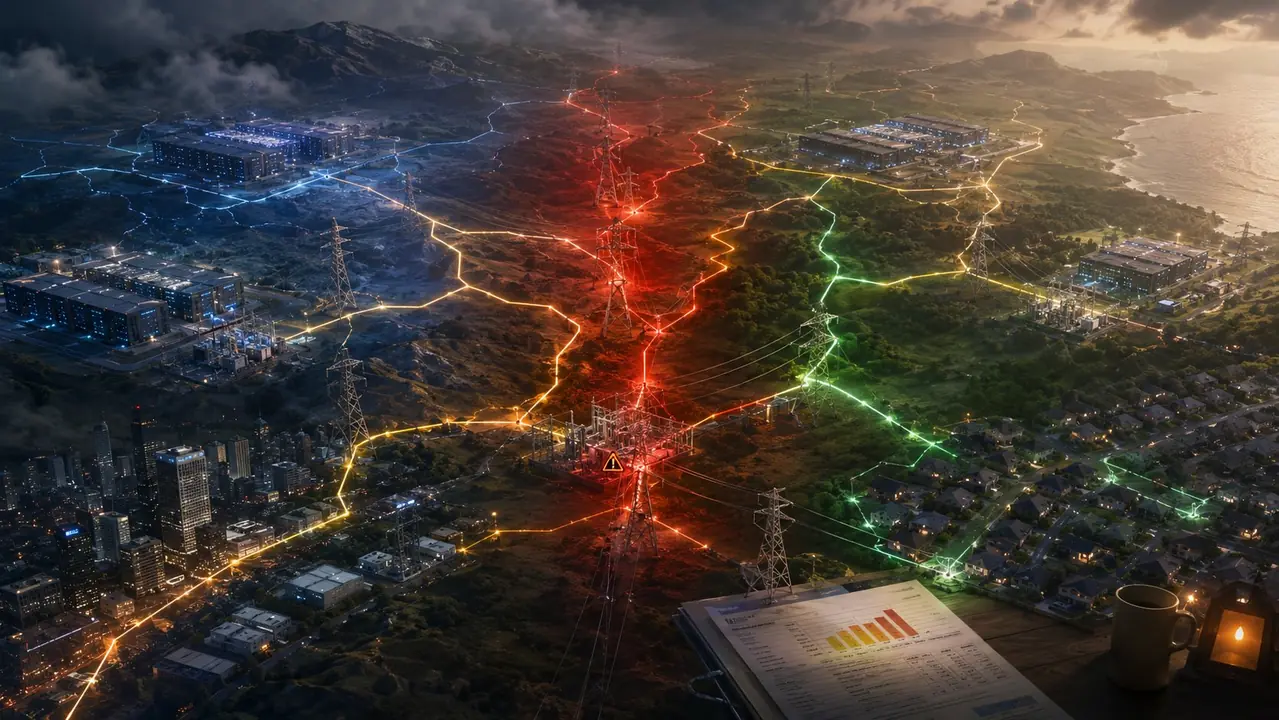
Three Scenarios for Electricity Prices in 2026
Possible Scenarios
- Limited price impact — new supply and grid investment keep pace with demand, while data centers pay a clear share of infrastructure costs.
- Regional price pressure — data center clusters increase costs in specific markets where the grid is already constrained.
- Policy intervention — regulators introduce special rate classes, grid contribution rules, or permitting limits to control household cost exposure.
1. Limited Price Impact
In the limited-impact scenario, data center demand rises, but utilities plan effectively. New generation comes online, transmission projects are approved, and data center operators sign contracts that reduce the burden on residential customers.
This scenario is more likely in regions with flexible power markets, available renewable or nuclear capacity, and clear rules for large-load customers.
2. Regional Price Pressure
In the regional pressure scenario, AI data center growth pushes demand ahead of supply in specific areas. Wholesale electricity prices may rise, utilities may need expensive grid upgrades, and households could face higher bills if costs are spread broadly.
This scenario is especially relevant where data center projects are concentrated in existing hubs. The local grid may become the main constraint even if national electricity supply appears adequate.
3. Policy Intervention
In the policy intervention scenario, regulators respond to public concern by changing rate structures or permitting rules. Large data centers could face special tariffs, grid contribution requirements, demand-response obligations, or stricter disclosure rules.
This would not necessarily stop AI infrastructure growth. It could instead make the cost structure more transparent and push developers toward locations where power capacity is easier to expand.
How This Connects to Inflation and Markets
Electricity prices are one input into broader inflation. If AI data center demand raises power costs in specific regions, it could affect households, small businesses, utilities, and local policymakers. However, the macro impact depends on scale and whether price pressure is local or widespread.
For markets, the issue cuts both ways. AI infrastructure spending can support demand for utilities, power equipment, semiconductors, construction, and energy. But if power constraints become severe, they could also limit AI deployment or increase costs for technology companies.
This makes the topic relevant to our broader inflation forecast for 2026 and stock market forecast for 2026.
What Signals to Watch
Forecasting Checklist
- Utility rate cases — whether utilities request higher rates to fund grid upgrades.
- Large-load tariffs — whether regulators create special pricing structures for data centers.
- Interconnection queues — whether projects wait longer for grid access.
- Power purchase agreements — whether data centers secure dedicated clean or firm power.
- Local opposition — whether communities resist new data centers due to cost, water, noise, or land concerns.
Follow Market Expectations
Explore Finance and Technology Forecasts
Nexory lets users follow real-world forecasts across technology, finance, crypto, politics, sports, and global events as expectations evolve.
Explore PredictionsConclusion: The Price Impact Depends on Grid Rules
AI data centers could raise electricity prices in some regions, but the outcome is not automatic. The price impact depends on how quickly supply expands, how grid costs are allocated, how flexible data center demand becomes, and how regulators respond.
The most important forecast for 2026 is regional. AI power demand may look manageable at a national level while still creating sharp pressure in specific markets. That is where the electricity price debate is likely to become most visible.
Frequently Asked Questions
Could AI data centers raise electricity prices?
They could contribute to higher prices in regions where demand grows faster than grid capacity, generation supply, and infrastructure investment. The impact depends on local market conditions and regulation.
Why would data centers affect household bills?
If utilities build new infrastructure for large data center loads and those costs are spread across all customers, households may pay part of the cost through higher bills.
Are electricity price effects the same everywhere?
No. The effect is likely to vary by region. Areas with concentrated data center growth and limited grid capacity face more risk than areas with available power and strong planning.
What policies could reduce price pressure?
Possible policies include special rates for large loads, clearer grid contribution rules, faster generation and transmission planning, demand-response requirements, and more transparent data center electricity reporting.