Netherlands World Cup 2026 Prediction: Van Dijk, Gakpo, and the Title Path
Last updated: June 2026 · 8 min read

Quick Answer
Prediction markets place Netherlands at roughly 3–4% probability to win World Cup 2026 — around 7th or 8th in global odds. They are strong Group F favourites and a credible quarter-final contender. Reaching the semi-final is the optimistic scenario. Xavi Simons’ ACL injury is the most significant setback to manage.
Netherlands enter the 2026 FIFA World Cup as one of the stronger European sides — defensively organised, with a clear playing identity under Ronald Koeman, and a squad that finished as semi-finalists at Qatar 2022. The expectations are measured: Oranje are not among the outright favourites, but they are genuine contenders to go deep into the knockout rounds.
What complicates the picture is the absence of Xavi Simons, who ruptured his ACL earlier in 2026 and will miss the tournament entirely. He was arguably the most creative Dutch player heading into the competition, and replacing that invention in tight knockout matches is a meaningful challenge.
This article examines the Netherlands’ Group F path, key players, tactical identity, realistic outcomes, and what prediction markets are currently pricing.
Group F: Netherlands, Japan, Sweden, Tunisia
The Netherlands were drawn into Group F alongside Japan, Sweden, and Tunisia — a group that, on paper, they should navigate without major difficulty. Group matches are scheduled in Texas and Missouri.
Opta’s supercomputer gives the Netherlands approximately a 48% chance of finishing top of the group. Prediction market data places them as clear favourites to advance, with some estimates around 88% probability of qualification. Japan, after their impressive Qatar 2022 performances against Germany and Spain, are the most credible threat in the group — and should not be underestimated.
Sweden have rebuilt under their national setup and carry quality in midfield, but lack the depth to challenge consistently. Tunisia’s ceiling in international competition tends to be competitive group performances rather than knockout progression.
For the Netherlands, the objective in Group F is to advance as group winners, which would set up a favourable knockout draw. Finishing second would likely produce a harder route, potentially against a top-four European side in the round of 16. See how group stage predictions across all 16 groups are shaping up.
Key Players: Strengths and Questions
Virgil van Dijk remains the cornerstone of the Dutch defence at 34. His reading of the game, aerial dominance, and ability to organise defensive structure have not visibly declined, and he continues to perform at a high level at Liverpool. He captains the side and sets the tactical tone at the back.
Cody Gakpo is the most reliable attacking threat. Operating primarily on the left, he is physical, direct, and capable of producing in big moments. His Liverpool form in 2025–26 has been one of the positives in an inconsistent club season, and he enters the tournament in reasonable condition.
Frenkie de Jong returns to the squad after fitness disruptions earlier in 2026. When fit, he remains one of the most accomplished deep midfielders in world football — his ability to carry the ball out from defence and control tempo is central to how Koeman wants to play. His physical condition heading into the tournament is a key variable.
Tijjani Reijnders has emerged as the central creative presence following Simons’ injury. His development at Manchester City has been significant, and Koeman is expected to use him in the number 10 role. The question is whether Reijnders can sustain that creative output over five or six consecutive knockout matches against elite opposition.
Memphis Depay, top scorer in World Cup qualifying with eight goals, returns to provide experience and finishing threat from a deeper or secondary position. At 30, his involvement is expected to be significant, though his role may be more fluid than in previous campaigns.
Xavi Simons’ absence is the most consequential factor. An ACL rupture in spring 2026 ended his tournament participation before it began. Simons had become the primary creative engine — capable of producing the unpredictable moment in tight matches. His loss reduces the team’s ability to unlock organised defences and creates a real ceiling question for the knockout rounds.
Tactical Profile Under Koeman
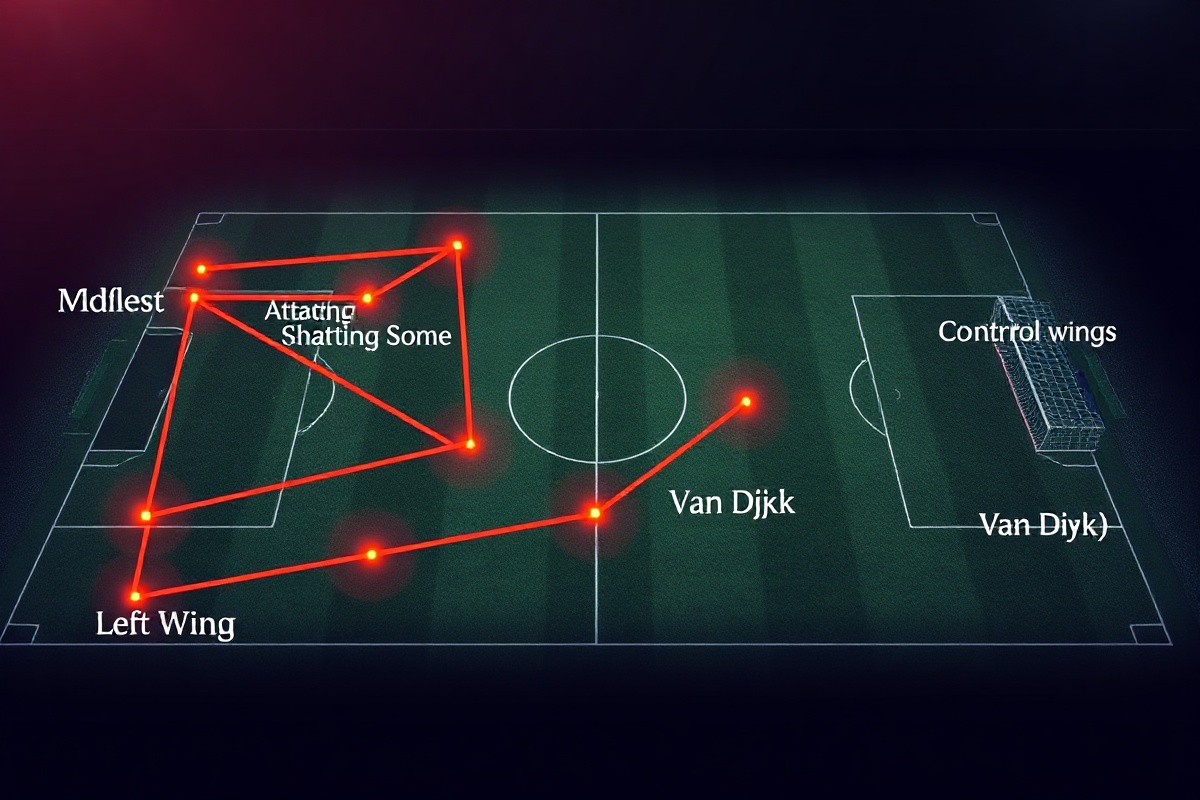
Ronald Koeman has built a Netherlands side that is structured, defensively disciplined, and built around individual quality rather than complex tactical systems. The Netherlands tend to operate in a 4-3-3 or 4-2-3-1 shape, using their defensive solidity as the base and relying on transitions and wide play to create attacking opportunities.
The strength of this approach is its resilience. Netherlands are difficult to break down and rarely concede cheap goals. The risk is that against deep-sitting, well-organised defences — which they will inevitably face from the quarter-final onward — they can become predictable without a player like Simons to create something from nothing.
Koeman’s experience as both player and manager in major tournaments gives the squad coherence under pressure. But the technical ceiling without elite creative depth is a genuine structural question as the tournament progresses.
Prediction Markets: What the Probabilities Say
Netherlands are currently priced at approximately 20/1 in outright markets, translating to around a 3–4% implied probability of winning the tournament. This places them broadly in the 7th–8th range globally — behind the clear tier of Spain, France, England, Brazil, and Argentina, but ahead of teams considered dark horses.
The most likely tournament exit, according to bookmaker consensus, is at the quarter-final stage. Reaching the final is possible but priced as a low-probability outcome — the gap between Netherlands and the top three or four contenders is meaningful.
Where the probabilities become interesting is in the round of 16. If Netherlands win Group F, they are likely to face a second-place finisher from a different group in the round of 32 — potentially a more manageable early knockout path than if they finish second. A clean run to the quarter-final is the baseline expectation.
For context on how the broader tournament odds are distributed, the full World Cup 2026 prediction markets analysis covers all major contenders and their probability distributions.
Follow World Cup 2026 Forecasts
Explore Netherlands and All WC 2026 Predictions on Nexory
Track how public expectations for Netherlands, favourites, and dark horses shift throughout the tournament on Nexory’s prediction platform.
Explore World Cup 2026 PredictionsScenario Analysis: How Far Can Netherlands Go?
Optimistic scenario — semi-final or beyond
If Van Dijk remains fit and dominant, De Jong controls the midfield rhythm, Gakpo delivers in key moments, and Reijnders steps into the creative void left by Simons, Netherlands could plausibly reach the semi-final. This scenario requires a favourable knockout draw and at least one upset of a higher-seeded contender. The historical precedent exists — Netherlands reached the final in 2010 and the semi-final in 2022.
Base scenario — quarter-final exit
The quarter-final is the most likely ceiling given the current squad composition. If Netherlands meet Spain, France, or England in the last eight, winning that match consistently requires a level of creative production that is harder to sustain without Simons. A competitive exit in the quarter-final, where they make life difficult for a top contender, is the most probable outcome.
Pessimistic scenario — round of 16 exit
An early exit becomes possible if De Jong’s fitness breaks down, if Gakpo enters a form slump, or if the creative limitations without Simons are exposed against a tactically disciplined round-of-16 opponent. Japan showed in Qatar that Dutch assumptions about group-stage progress can be tested by organised, transition-focused opponents.
Key Risks to Watch
Creative depth post-Simons. This is the central structural risk. In matches against teams that sit deep and absorb pressure, Netherlands need a player who can create from tight spaces. Reijnders is capable, but Simons was operating at a different level of unpredictability.
Van Dijk’s age and recovery demands. At 34, playing five or six matches in approximately four weeks in North American summer heat is a physical challenge. If Van Dijk’s level drops through fatigue, the defensive architecture weakens significantly. There is no clear like-for-like replacement in the squad.
Frenkie de Jong’s fitness sustainability. De Jong is a transformative player when available, but his injury record over the past 18 months has been a recurring concern. A tournament stretching over a month places significant physical demands on a player whose fitness has not always been reliable.
Draw dependency. Netherlands’ realistic path to the semi-final requires avoiding the very top contenders until the last four. Whether the knockout draw forces a collision with a top-four side in the quarter-final will significantly influence how far they go. See how the knockout stage paths are being mapped for major contenders.
How Netherlands Compare to Other Contenders
Among the European sides, Netherlands sit in a tier below the clear favourites — Spain, France, and England — but above the teams classified as genuine dark horses. They share a bracket with Portugal, Germany, and Belgium in terms of market expectations: strong enough to reach the late stages, but not possessing the depth or attacking variety to be the outright tournament pick.
The full comparison of World Cup 2026 favourites and their probability ranges provides useful context for where Netherlands sit relative to the broader field.
Frequently Asked Questions
What are Netherlands’ chances of winning the 2026 World Cup?
Prediction markets place Netherlands at approximately 3–4% probability to win the tournament, equivalent to odds of around 20/1. They are a credible quarter-finalist but face a significant gap between themselves and the top three or four contenders.
Which group are Netherlands in at World Cup 2026?
Netherlands are in Group F alongside Japan, Sweden, and Tunisia. Matches are scheduled in Texas and Missouri. They are strong favourites to top the group, with Opta giving them approximately a 48% chance of finishing first.
Will Xavi Simons play for Netherlands at World Cup 2026?
No. Xavi Simons ruptured his ACL in spring 2026 and will miss the entire tournament. His absence significantly reduces the team’s creative depth, particularly in tight knockout matches against well-organised defences.
How far are Netherlands predicted to go at World Cup 2026?
A quarter-final exit is the most commonly predicted outcome. Reaching the semi-final is the optimistic scenario and is possible with a favourable draw and key players staying fit. An early knockout exit becomes realistic if De Jong’s fitness fails or Gakpo underperforms.
Who are Netherlands’ key players at World Cup 2026?
Virgil van Dijk (captain, central defender), Cody Gakpo (attacking threat), Frenkie de Jong (midfield control), Tijjani Reijnders (creative number 10 role), and Memphis Depay (experience and finishing) are the central figures in Koeman’s squad.