Why Mbappé Won’t Win the 2026 World Cup Golden Boot
Last updated: June 2026 · 8 min read
Kylian Mbappé is the pre-tournament favourite to win the 2026 World Cup Golden Boot. Every major prediction market has him near or at the top of top scorer odds. He won it in 2022 with eight goals. He is playing for one of the tournament’s strongest sides. The logic is clean and obvious.
Which is exactly why it probably won’t happen.
The history of the World Cup Golden Boot is not a history of favourites being confirmed. It is a history of surprise, timing, and the peculiar logic of tournament football — where the player who scores the most is not always the player everyone expected to score the most. This piece makes the analytical case that someone other than Mbappé will win the 2026 Golden Boot, and examines who that is most likely to be.

Quick Answer
Mbappé is the markets’ favourite but faces three structural obstacles to a repeat Golden Boot: France’s defensive counter-attacking system limits his shot volume, the pre-tournament favourite has underperformed in this award more often than won it, and the 48-team format creates more paths for a dark horse striker from a deep-running outsider nation to accumulate goals. Vinícius Jr. and Lamine Yamal are the most credible alternatives.
The Pre-Tournament Favourite Rarely Wins It
Start with the historical record. The last six World Cups have produced six different Golden Boot winners. In most of those tournaments, the pre-tournament favourite for individual top scorer did not win the award.
In 2014, the expectation was that Cristiano Ronaldo or Lionel Messi would win the Golden Boot. The award went to James Rodríguez, a 22-year-old midfielder from Colombia who scored six goals in five matches before his nation was eliminated. Nobody’s pre-tournament shortlist had him at the top.
In 2018, Harry Kane won it — correctly priced as a contender, but not the outright favourite. In 2010, Thomas Müller won it as a 20-year-old in his first major tournament. In 2006, Klose. In 2002, Ronaldo Nazário — but he was returning from years of injury, a selection few would have backed confidently in advance.
Mbappé in 2022 is the exception in recent history: the outright pre-tournament favourite who actually delivered. Regression to the mean suggests 2026 is unlikely to replicate it. For context on the broader candidates and odds, the full Golden Boot prediction breakdown shows the current market distribution.
France’s Tactical System Works Against Him
The second structural argument against Mbappé is France’s playing style. France are not a high-possession, high-shot-volume team. They are a compact, defensively organised side that transitions quickly and relies on individual brilliance in counter-attacking phases. This system produces wins — France have one of the best defensive records of any major international side — but it does not maximise individual goal tallies.
In 2022, Mbappé benefited from an unusual confluence: France reached the final despite defensive errors, meaning they played seven matches and Mbappé had maximum scoring opportunities. He also scored a hat-trick in the final — three goals in a single game that inflated his total dramatically. Remove that match and his 2022 tally would have been five, enough to win but closer to other contenders.
In 2026, if France play their typical counter-attacking structure, Mbappé’s shot volume per match will be limited. Didier Deschamps has consistently deployed France in a shape that prioritises defensive stability over attacking output. Mbappé scores when he gets chances — but France’s system gives him fewer of them per match than his club career at Real Madrid would suggest.
A typical France knockout performance involves one or two Mbappé opportunities per match — decisive, technically excellent, but not the sustained volume required to win a Golden Boot by a comfortable margin. He needs France to both go deep AND play in a way that gives him high shot frequency. That combination is not guaranteed.
The 48-Team Format Increases Dark Horse Paths
The third argument is structural and tournament-specific. The 48-team format introduces additional knockout rounds that create more paths for unexpected nations to reach the quarter-finals and beyond. A team that finishes third in a competitive group can still qualify — and if they qualify with a clinical striker who has been scoring consistently, that striker enters the Golden Boot race from a position the market underprices.
The James Rodríguez precedent is the model. Colombia in 2014 were not tournament favourites. They went deep, Rodríguez was extraordinary, and he won the award from a position that nobody had him winning from at the start. With 48 teams, more nations get the matches required for this scenario to materialise.
Africa and Asia, in particular, have more representation in 2026 than any previous edition. If a striker from Morocco, Senegal, Japan, or South Korea goes on a scoring run deep into the tournament, they will accumulate the goals needed for a top scorer race that the pre-tournament markets did not price.
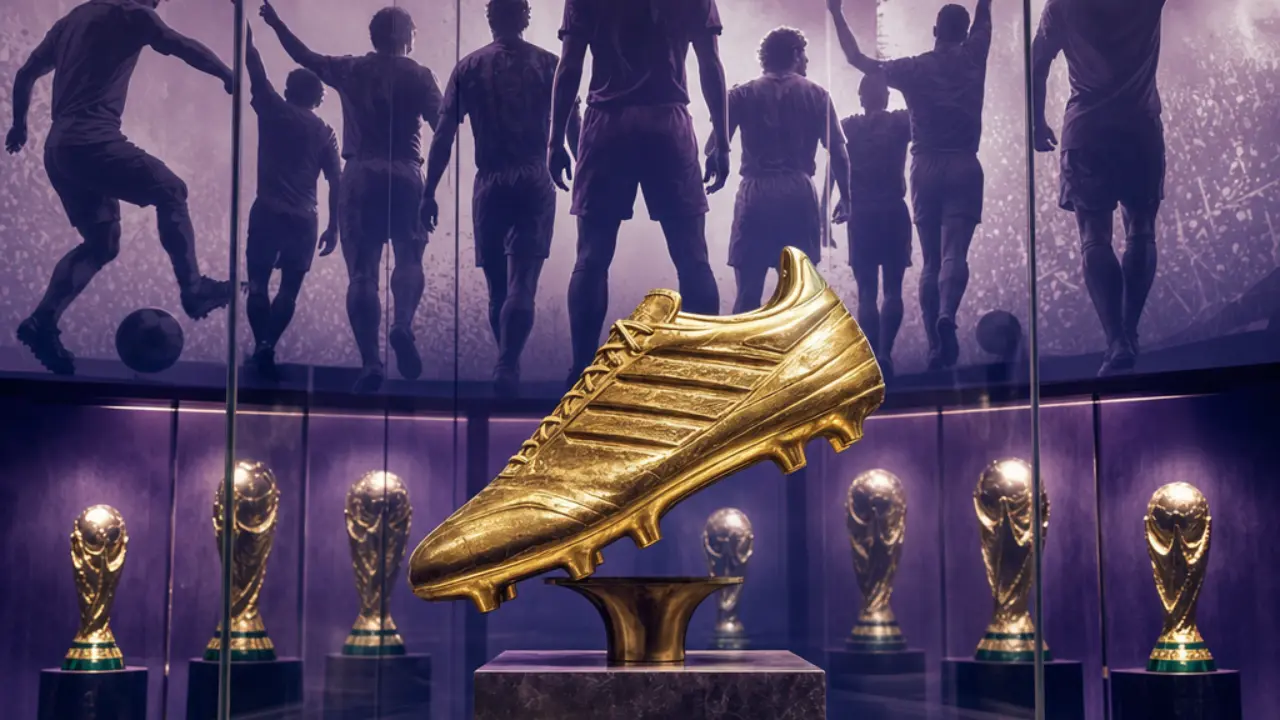
Who Will Actually Win It
Vinícius Jr. (Brazil) — Most Likely Alternative
Vinícius is the most credible counter-candidate. Brazil play a more attacking, higher-tempo style than France, giving him more direct opportunities per match. If Brazil progress deep — which their squad quality makes plausible — Vinícius will have the platform to score in volume. His Champions League records at Real Madrid show he can perform under elite defensive attention. The question is whether Brazil’s system creates enough clear chances in a compressed tournament schedule.
Lamine Yamal (Spain) — The Youth Surge
Yamal at 18 is perhaps the most dangerous player in the tournament on his day. Spain’s possession system creates scoring chances across the squad rather than funnelling everything through one striker, but Yamal’s direct running and late arrivals into the box make him a consistent goal threat. If Spain go all the way — and they are the current tournament favourite — Yamal’s tally across seven matches could be significant. A 2014-style emergence from the tournament favourite’s supporting cast is plausible.
Harry Kane (England) — The Reliable Counter
Kane won the 2018 Golden Boot. England in 2026 are a stronger side than in 2018 — with more creative talent to supply him — and Kane’s positional intelligence and penalty conversion rate remain elite. If England go deep, his expected goal numbers over seven matches are competitive with anyone in the field. He is a reliable if unfashionable pick.
The Dark Horse: A James Rodríguez Scenario
Every tournament produces a player who nobody had on their pre-tournament shortlist. In the 48-team format, the probability of this happening is higher than ever. The striker who scores five or six goals leading a nation on a surprise deep run — from Africa, South America’s second tier, or an Asian side — is a genuine non-trivial scenario. Prediction markets underweight this outcome. For a broader perspective on tournament winner scenarios, the World Cup 2026 final prediction analysis examines how bracket variance can amplify unexpected outcomes.
What Markets Are Pricing — And What They’re Missing
Prediction markets assign Mbappé significantly higher implied probability for the Golden Boot than any other player. This is rational given his track record and France’s likely deep run. But markets systematically underweight two factors in individual award predictions: tactical system effects on shot volume, and the fat tail of dark horse striker outcomes in extended tournaments.
The market is essentially asking: given France reach the semi-finals or final, and given Mbappé plays all seven matches at high intensity, what is his expected goal output? That conditional probability is genuinely high. The issue is the prior probability before those conditions are met. France losing in the quarter-finals, Mbappé managing one injury across seven weeks, or France’s tactical discipline suppressing his volume — any of these scenarios results in a Golden Boot that goes elsewhere.
For context on how prediction markets handle these types of layered probability assessments, and why they often assign excessive weight to the most legible narrative, what prediction markets say about the 2026 World Cup favourites explores the underlying mechanics.
Follow the Golden Boot Race
Track World Cup 2026 Top Scorer Forecasts on Nexory
See how prediction market odds shift as goals are scored and dark horse candidates emerge through the bracket.
Explore Top Scorer PredictionsConclusion
Mbappé is the best individual player in this tournament. He may well score the most goals. But the analytical case that he will not win the Golden Boot is stronger than the markets currently reflect: the historical pattern of surprise winners, France’s goal-suppressing tactical system, and the expanded format’s creation of dark horse paths all point toward an outcome that markets are underpricing.
The most likely alternative is Vinícius Jr. if Brazil go deep, or a James Rodríguez-style emergence from an unexpected source. The least likely outcome, historically speaking, is the one markets are currently pricing as most likely: the pre-tournament favourite winning it cleanly.
Frequently Asked Questions
Will Mbappé win the 2026 World Cup Golden Boot?
Mbappé is the pre-tournament favourite but faces structural obstacles: France’s counter-attacking system limits his shot volume, and the historical record shows the pre-tournament favourite rarely wins this individual award. He won it in 2022, but the pattern across recent tournaments suggests surprise winners are more common than confirmed favourites.
Who could beat Mbappé to the 2026 Golden Boot?
The most credible alternatives are Vinícius Jr. (Brazil), Lamine Yamal (Spain), and Harry Kane (England). A dark horse from a surprise deep-running nation — similar to James Rodríguez in 2014 — is also a non-trivial scenario in the expanded 48-team format, which creates more paths for unexpected nations to go deep.
Does the Golden Boot favourite usually win it?
No. In most recent World Cups, the pre-tournament Golden Boot favourite did not win the award. James Rodríguez in 2014, Müller in 2010, and Klose in 2006 were all relatively unexpected winners. Mbappé’s 2022 win was an exception. Markets systematically overweight the most famous name in individual award predictions.
How does France’s tactical system affect Mbappé’s goal scoring?
France under Deschamps play a compact, defensively organised structure that prioritises counter-attacking over sustained possession and high shot volume. This limits Mbappé’s shots per match compared to his club career at Real Madrid. He scores when opportunities arrive, but the system creates fewer chances per game than a high-pressing, high-possession side would.
Who won the Golden Boot at the last three World Cups?
Kylian Mbappé won it at the 2022 World Cup with 8 goals. Harry Kane won it at the 2018 World Cup with 6 goals. James Rodríguez won it at the 2014 World Cup with 6 goals — despite Colombia being eliminated in the quarter-finals, making him the most recent surprise winner.