China’s WAICO AI Alliance: Scenarios for the Global AI Race
Last updated: July 2026 · 8 min read
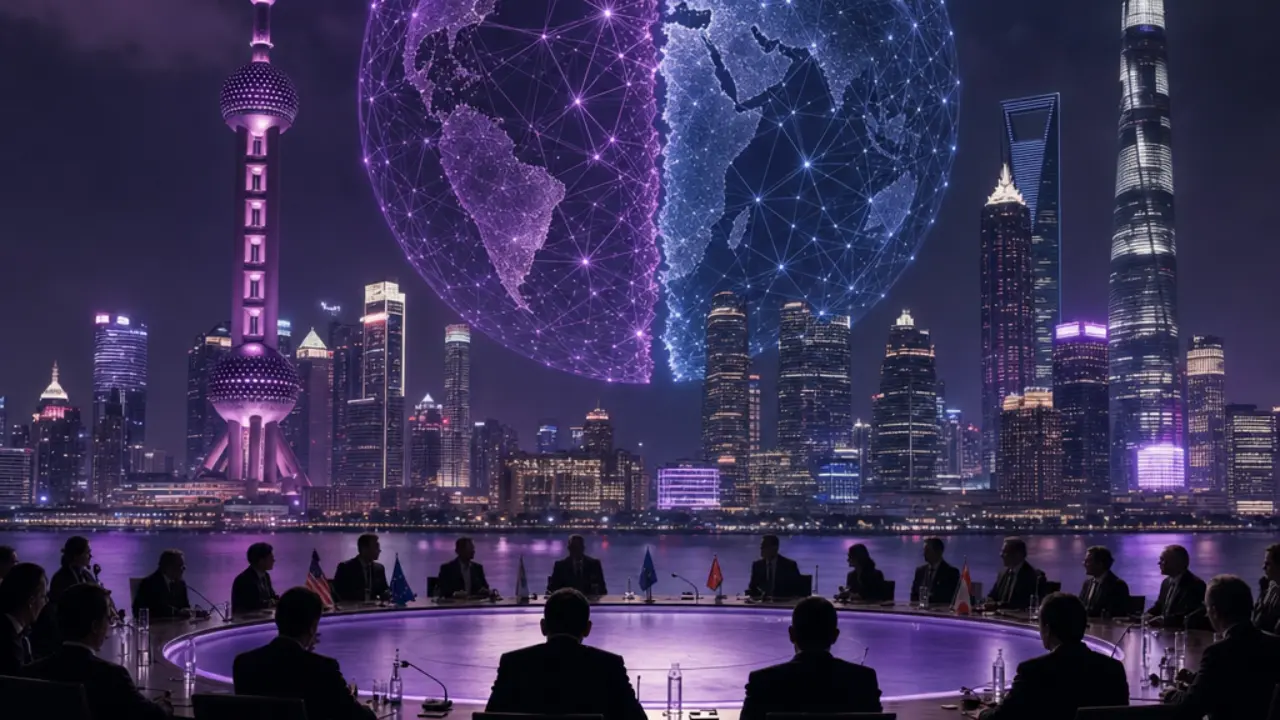
On July 16, 2026, China formally launched the World Artificial Intelligence Cooperation Organisation (WAICO) — a 29-nation intergovernmental body headquartered in Shanghai. A day later, President Xi Jinping told the World AI Conference that AI development “should not be a solo performance by a single country, but a symphony of international cooperation,” a line widely read as aimed at the United States.
The launch marks a shift in how China competes in AI: from exporting infrastructure and models to building institutions that shape global rules. This article looks at what WAICO is, why it matters for the global AI race, and the main scenarios for how the organisation could evolve.
Quick Answer
WAICO is a China-led intergovernmental AI organisation formed on July 16, 2026, with 29 founding member states. Headquartered in Shanghai, it aims to promote international AI cooperation and develop shared regulation, with founding members including Indonesia, Brazil, Malaysia, South Africa, Senegal, Russia, and Pakistan. Analysts expect Beijing to use the alliance to influence how AI policy is framed at the United Nations — filling a space left as Washington steps back from global norms-setting.
What WAICO Is — and What It Isn’t
Chinese Premier Li Qiang first floated the idea of a world AI cooperation body in July 2025. A year later it exists on paper and in headquarters: an intergovernmental organisation whose stated goals are international cooperation and AI regulation that keeps the technology “beneficial and safe for humans.” UN Secretary-General Antonio Guterres attended the launch event — a signal of the UN-facing role Beijing appears to envision for it.
What WAICO is not, at least yet, is a technology-sharing bloc or a military alliance. Its founding membership is weighted toward the Global South — countries that want AI capacity-building and a seat at the governance table, and that Beijing has courted with promises of equitable access and warnings against “new historical injustices.” Notably absent: the United States, the European Union, and most US allies.
Why China Is Building Institutions Now
A vacuum in global AI governance
With Washington retreating from global cyber and AI norms-setting processes and cutting funding for cyber diplomacy, Beijing sees an opening to present its state-centric governance vision as the default for much of the world. Carnegie Endowment analysts describe WAICO as a bid for Global South buy-in to that vision.
Strengths that offset the chip gap
China still lags the US in access to cutting-edge semiconductors, and export restrictions tightened again in 2026. But it holds advantages elsewhere: more than twice the US’s electricity generation to power data centers, dominance in rare earth minerals, and open-source models that are gaining ground globally. Institutional leadership adds a fourth lever that chip controls cannot block.
Numbers at the UN
Middle-power and low-income allies carry votes in multilateral bodies. If WAICO grows beyond its founding 29, it could give Beijing a ready-made coalition whenever AI standards, treaties, or resolutions reach the UN floor.
Scenarios: Where WAICO Could Go
Possible Scenarios
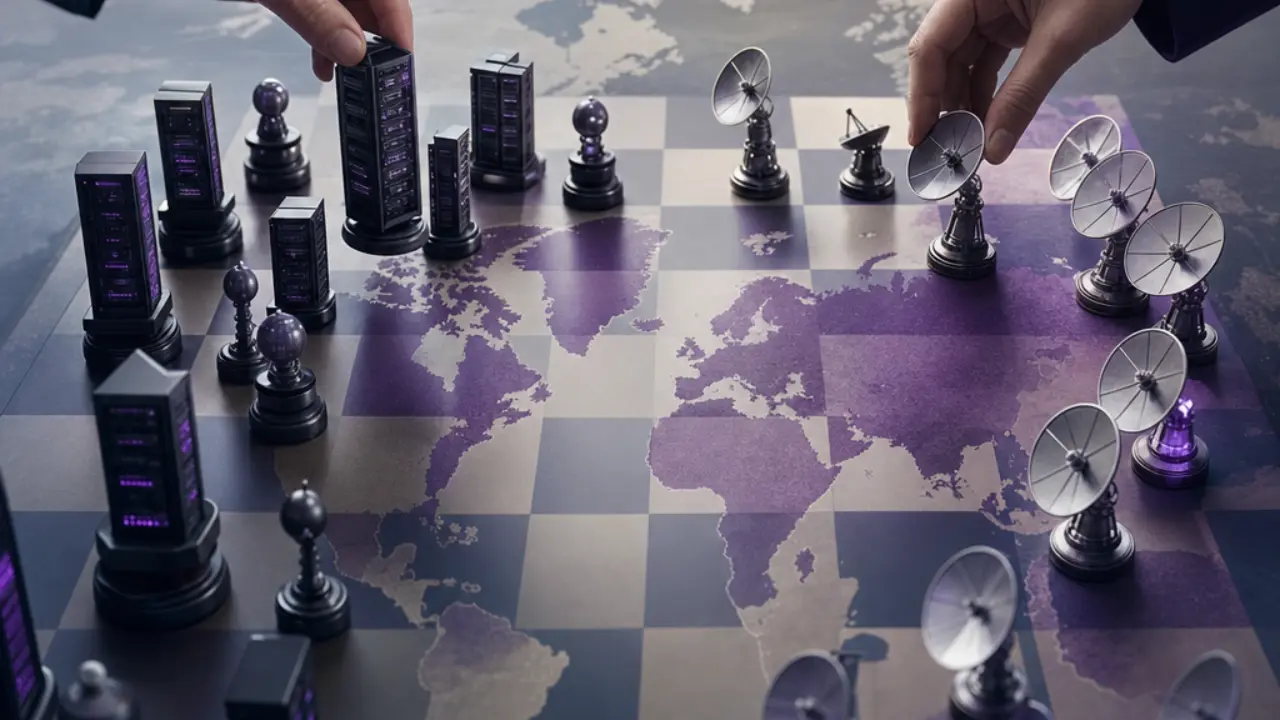
- Influential bloc — WAICO expands its membership, coordinates positions ahead of UN processes, and becomes the primary vehicle through which dozens of countries adopt Chinese-aligned AI standards and infrastructure. Global AI governance splits into two gravitational centers.
- Parallel-track world — WAICO consolidates a China-aligned sphere while the US, EU, and allies deepen their own frameworks. Neither side dominates; companies face fragmented compliance regimes, echoing the internet’s gradual regionalization.
- Paper organisation — WAICO holds summits and issues declarations but gains little binding authority, as member states hedge between Beijing and Washington. Its main effect is symbolic: evidence of China’s ambition rather than an instrument of it.
Risks and Uncertainty
The biggest unknown is commitment depth. Founding members like Brazil, Indonesia, and South Africa maintain substantial ties with the US and Europe, and joining a cooperation body costs little. Whether they align with Beijing on contested questions — surveillance norms, data governance, military AI — is a separate matter that summit photographs do not settle.
There is also the question of how Washington responds. A competing US-led initiative, expanded chip restrictions, or bilateral pressure on WAICO members could all reshape the calculus. These dynamics are part of the broader picture we examined in US-China trade and technology tensions in 2026 — and the corporate dimension of the race in OpenAI vs Google: who will lead the AI race.
Implications
For governments, WAICO forces a positioning choice that many would prefer to avoid. For companies, it raises the odds of divergent AI rules across markets. For forecasters, it creates trackable questions: how many countries join WAICO by end-2027, whether the organisation produces a binding framework, and whether a US-led counterweight emerges. Each is a measurable outcome that collective forecasting can price as evidence accumulates — the same lens we applied in AI predictions for 2026.
Follow Geopolitical Forecasts
Explore Geopolitics Predictions on Nexory
Nexory lets users forecast how global power shifts, alliances, and technology rivalries unfold — and watch how collective expectations move as events develop.
Explore Geopolitics PredictionsConclusion
WAICO’s launch is less about what the organisation can do today than about the direction it signals: China intends to compete for the rules of AI, not just the technology. Whether that produces an influential bloc, a divided governance landscape, or a symbolic forum depends on choices — in member capitals and in Washington — that are still ahead. What to watch next: WAICO’s membership growth, its first concrete policy outputs, and any coordinated US response.
Frequently Asked Questions
What is WAICO?
WAICO — the World Artificial Intelligence Cooperation Organisation — is a China-led intergovernmental body formed on July 16, 2026, and headquartered in Shanghai. Its stated goals are promoting international AI cooperation and developing shared regulation to keep AI safe and beneficial.
Which countries joined WAICO?
WAICO launched with 29 founding member states, including Indonesia, Brazil, Malaysia, South Africa, Senegal, Russia, and Pakistan. The membership is weighted toward Global South nations; the US, EU members, and most US allies are not part of it.
Is WAICO a rival to the UN on AI governance?
Not formally — analysts expect Beijing to use WAICO to shape AI policy within UN processes rather than replace them. A coordinated bloc of member states could carry significant weight when AI standards and resolutions are negotiated multilaterally.
Does WAICO change the US-China AI race?
It adds an institutional front to a race previously fought over chips, talent, and models. The near-term technological balance is unchanged, but if WAICO grows, it could shift which country’s standards and governance vision much of the world adopts. That outcome remains uncertain.