Europe Defense Spending 2026: How NATO, Ukraine, and Security Risk Could Shift Markets
Last updated: May 2026 · 8 min read
Europe defense spending in 2026 is no longer a narrow budget topic. It has become a major geopolitical forecast involving NATO commitments, Ukraine support, industrial capacity, fiscal pressure, and the long-term security balance between Europe, Russia, and the United States.
The central question is not simply whether Europe spends more. The real forecasting question is whether higher budgets translate into actual readiness, ammunition production, air defence, logistics, drones, cyber resilience, and a more independent European defence industrial base.
Quick Answer
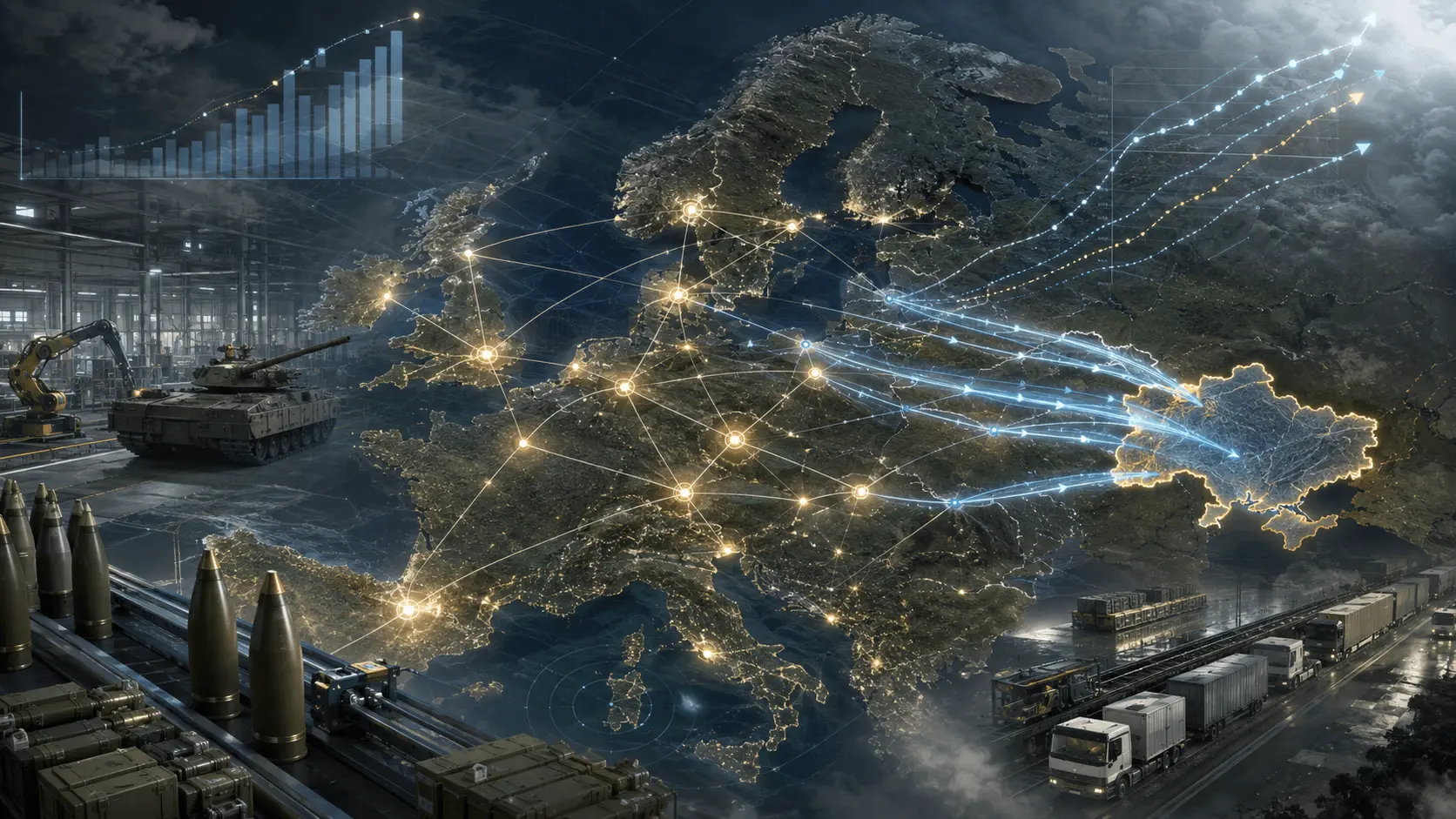
Europe defense spending in 2026 is likely to remain elevated as NATO members respond to Russia risk, Ukraine support needs, and pressure to rebuild military capacity. The main uncertainty is whether higher spending becomes effective capability or is slowed by fiscal limits, procurement delays, industrial bottlenecks, and political disagreement.
Why Europe Defense Spending Matters in 2026
Europe’s defence shift is being driven by several overlapping pressures. Russia’s war against Ukraine has exposed the importance of ammunition stockpiles, air defence, drones, logistics, and long-term industrial production. At the same time, European governments are facing pressure to carry more of the security burden within NATO.
The 2026 question is whether Europe is entering a temporary spending surge or a structural rearmament cycle. If the increase is structural, it could affect defence companies, public finances, EU industrial policy, NATO procurement, and long-term security planning.
This article fits into the broader geopolitics cluster because European security policy is directly linked to Russia–Ukraine scenarios. For related context, see our article on whether the Russia–Ukraine war could end in 2026.
Main Drivers of Higher Defence Spending
Key Drivers
- NATO spending commitments — members are under pressure to move beyond old spending benchmarks and toward larger long-term defence allocations.
- Russia risk — European governments are planning for a security environment where deterrence remains central.
- Ukraine support — direct military aid, joint production, ammunition supply, and defence industry cooperation are now part of European security planning.
- Industrial bottlenecks — higher budgets do not automatically create missiles, shells, drones, vehicles, or air defence systems quickly.
- US burden-sharing pressure — Europe may need to prepare for a less predictable US role in future NATO debates.
- Fiscal constraints — higher defence spending competes with social spending, infrastructure, green investment, and debt limits.
Three Europe Defense Spending Scenarios
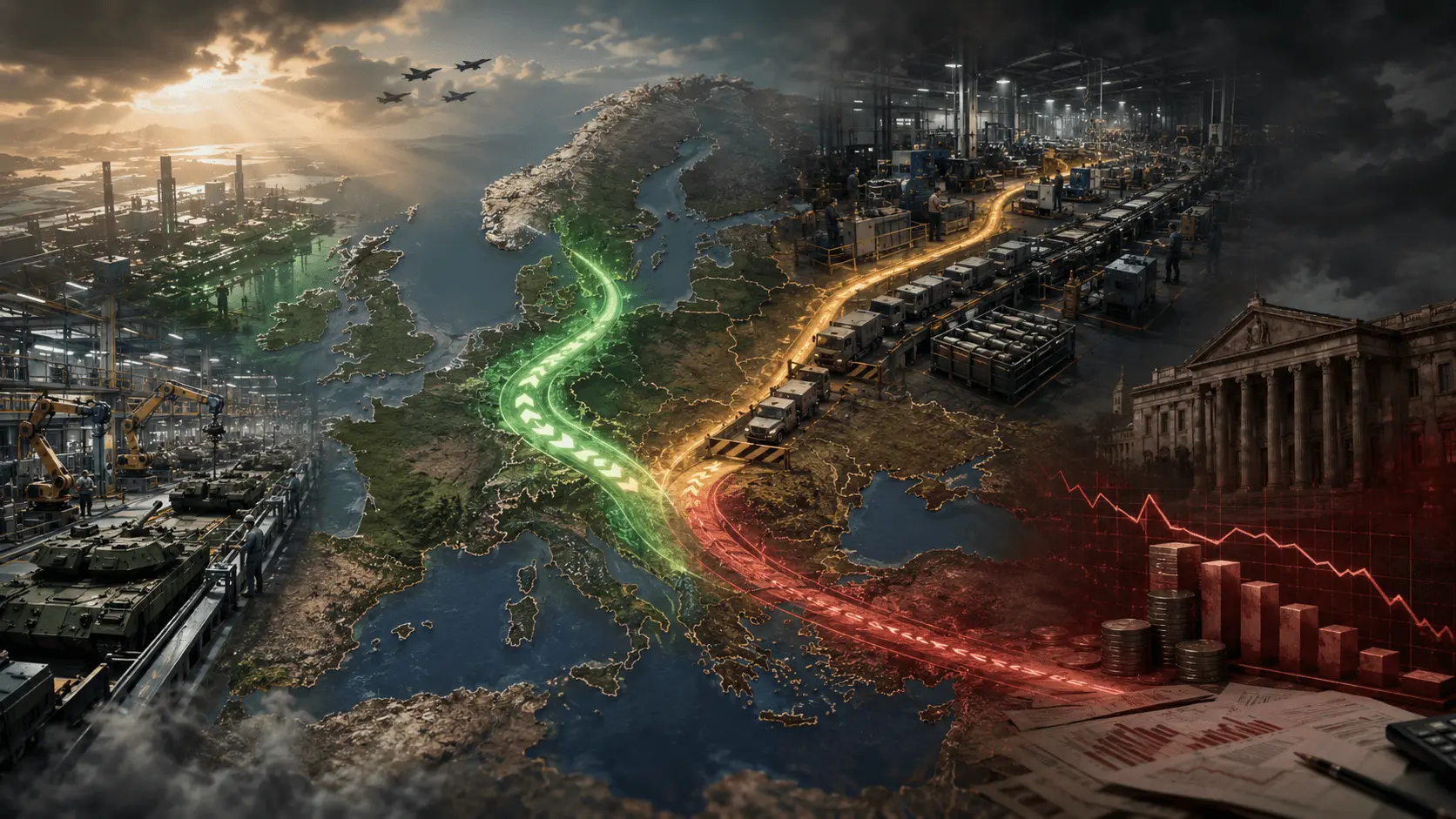
Possible Scenarios
- Accelerated rearmament scenario — major European countries raise budgets quickly, expand joint procurement, support Ukraine’s defence industry, and strengthen domestic production capacity.
- Uneven implementation scenario — headline budgets rise, but delivery is slowed by procurement delays, industrial limits, political disagreements, and uneven national priorities.
- Fiscal backlash scenario — governments face voter resistance, deficit concerns, or coalition disputes, causing spending plans to become slower, more selective, or politically unstable.
Germany as the Key Signal
Germany is one of the most important countries to watch because its budget choices affect the entire European defence ecosystem. If Germany sustains much higher spending, it can influence procurement demand, joint production, industrial investment, and NATO capability planning.
A stronger German defence posture could support air defence, ammunition production, logistics, armoured vehicles, and cooperation with Ukraine. But the same shift may create fiscal and political debates inside Germany and across the EU.
For forecasters, Germany is not the only signal, but it is one of the clearest indicators of whether Europe’s rearmament is becoming structural rather than temporary.
Ukraine Support and Defence Industry Capacity
Ukraine support is becoming more closely connected to European industrial policy. The question is no longer only how many weapons are transferred from existing stockpiles. It is whether Europe can finance and produce enough equipment, ammunition, drones, and air defence over multiple years.
This matters because defence production has long lead times. A budget increase in 2026 may not immediately create battlefield capacity. Factories need contracts, skilled workers, supply chains, raw materials, and stable demand before they expand output meaningfully.
If Europe succeeds, Ukraine support becomes more predictable and NATO readiness improves. If production lags, Europe may face a gap between political commitments and practical capability.
Market and Economic Implications
Higher defence spending can affect markets in several ways. Defence contractors may benefit from larger order books, while governments may face more pressure on deficits and borrowing. Industrial policy may also shift toward ammunition, drones, cyber security, satellite systems, and dual-use technology.
The macro effect is more complicated. Defence spending can support manufacturing and employment, but it can also crowd out other priorities if fiscal space is limited. Countries with high debt or fragile coalition politics may find it harder to maintain large increases.
For broader macro context, see our articles on global recession risk in 2026 and the stock market forecast for 2026.
Forecasting Signals to Watch
Forecast Checklist
- Budget execution — approved budgets matter less if funds are not spent effectively.
- Long-term contracts — industry needs multi-year demand visibility before expanding production.
- Ammunition output — shell and missile production are practical readiness indicators.
- Air defence procurement — this remains a key capability gap for Europe and Ukraine.
- Joint procurement — coordination can reduce duplication, but politics often slows it down.
- Fiscal backlash — budget pressure or voter resistance can weaken long-term commitments.
- Ukraine production partnerships — deeper cooperation with Ukraine’s defence industry can change the capability timeline.
Europe defense spending also belongs in the broader geopolitical risk framework. For a wider view of global risk outcomes, see our pillar article on geopolitical outcomes prediction markets are watching in 2026.
Follow Geopolitical Forecasts
Explore Real-World Predictions on Nexory
Nexory lets users follow and participate in prediction markets around geopolitics, crypto, finance, sports, and global events as expectations change over time.
Explore PredictionsConclusion
Europe defense spending in 2026 is a major geopolitical signal. Higher budgets suggest a long-term shift in European security policy, but the outcome remains uncertain. The key question is whether governments can convert spending into readiness, industrial capacity, Ukraine support, and credible deterrence while managing fiscal and political constraints.
European defense spending is closely tied to the US-China competition in 2026 and affects the broader European inflation outlook.
Frequently Asked Questions
Why is Europe increasing defence spending in 2026?
Europe is increasing defence spending because of Russia risk, Ukraine support needs, NATO commitments, industrial capacity gaps, and pressure for stronger European security resilience.
Does higher defence spending automatically improve security?
Not automatically. Higher spending improves security only if it becomes usable capability, including ammunition, air defence, logistics, trained personnel, cyber resilience, and reliable production capacity.
How could defence spending affect European markets?
Defence spending could support defence contractors and industrial investment, but it may also increase fiscal pressure, debt concerns, and political debate over budget priorities.
What should forecasters watch?
Forecasters should watch budget execution, ammunition production, long-term procurement contracts, air defence orders, Ukraine partnerships, joint EU procurement, and fiscal backlash.